Harnessing heat for 80% theoretical efficiency
Scientists at Rice University in Texas have developed a device which converts heat into light by squeezing it into a smaller bandgap. The ‘hyperbolic thermal emitter’ could be combined with a PV system to convert energy otherwise wasted as heat – a development the researchers say could drastically increase efficiency.
Tritium chargers will enable UK electric vehicle drivers to “fill up” faster and go further
The U.K. is leaping ahead in its deployment of EV charging infrastructure. Box Energi has chosen Australia’s Tritium Veefil-RT technology to ramp up the number of refill sites around the U.K. in a move which will boost not only accessibility and driving range but confidence in emissions-free driving.

State news service: China has already connected 870 MW of this year’s subsidized PV projects
The state-owned China News Service today reported almost $80 million is left in the pot for large scale project subsidies this year despite almost 420 facilities with a combined generation capacity of 1.77 GW having missed out in the auction.

Tonga breaks ground on its first off-grid solar array
The solar PV system is part of a 1.25 MW portfolio, where power will be sold to the island’s villagers through pre-paid net metering. The Asian Development Bank, with the help of other institutions, is supporting the deployment of solar on the Pacific Ocean’s small island nations.
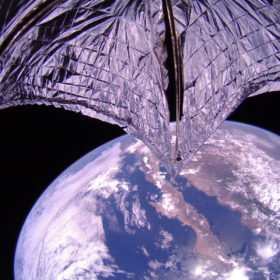
Solar sails into orbit on crowdfunded satellite
A satellite launched from Florida last month has successfully unfurled its ‘solar sail’ in an early test of a new type of sunlight powered propulsion. The Planetary Society aims to demonstrate the technology as a viable way to propel small satellites, greatly lowering the cost of space exploration.

Canadian Solar signs power supply deal for biggest project in Alberta
The solar manufacturer and developer was racing to sell off a significant chunk of its late-stage portfolio by the end of last month to rebound after assuring investors the losses registered in the first quarter of this year would prove to be a one-off.
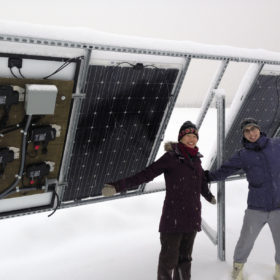
The weekend read: Pursuing a 20% bifacial boost
Research on bifacial solar panel performance has moved performance analysis closer to a standardized practice than ever before. More field tests are underway across the United States, and the first waves of data are expected this year. These tests will help standardize a predictive model for bifacial projects that is bankable.

Nigeria aims to lower solar electricity tariffs agreed three years ago
In July 2016 Nigeria signed power purchase agreements with 14 utility scale PV projects with a total generation capacity of 1,075 MW. None of the projects has reached financial close and pv magazine has learned the government wants to reduce the agreed tariffs.

Hanwha Q-Cells assumes market leadership in Europe
In Germany, the Korean PV manufacturer increased output to 760 MW last year. Despite a highly competitive environment and persistently high pressure on margins, Hanwha says it is looking to the future with optimism. The company has further diversified away from solar module production in recent months.

CATL to enter Japan’s residential storage market
Previously known for its automotive activity, CATL is turning to another promising sector to generate demand for its battery cells. With the first few hundred thousand Japanese solar households seeing their 10-year FIT contracts expire, demand for small scale storage is on the rise
