
GCL-Poly posts $141m loss in H1
The Chinese PV group recorded a loss attributable to owners of the company of roughly $141.1 million, as its solar materials division posted a loss of approximately $185.5 million.

Tepco reveals plan to spin off global renewables unit
The Japanese utility will set up a new, separate company early next year to oversee its renewables generation business, but says it remains committed to developing 6-7 GW of new projects in the years ahead.
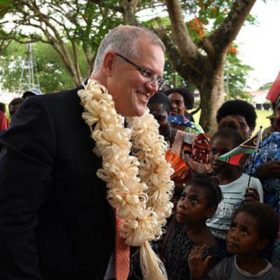
Australia to redirect $337.8m in aid to Pacific neighbors for renewables
In anticipation of the Pacific Islands Forum (PIF) in Tuvalu this week, Australian Prime Minister Scott Morrison is set to announce A$500 million ($337.75 million) in foreign aid to partnering Pacific nations in the form of a climate change and oceans funding package for renewable energy investment and climate resilience.
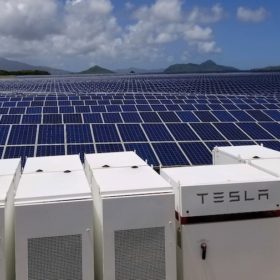
Using machine learning and cheap satellite data to design rooftop solar power
Researchers have built a tool to use cheap satellite imagery – like Google Maps – to automatically create solar designs with a 91% accuracy rate.
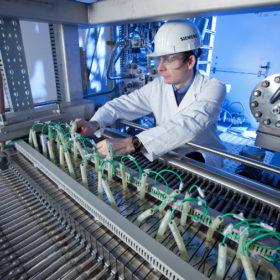
A close look at nature could lead to cheaper hydrogen
Scientists at the Australia National University have observed a key stage in the process of photosynthesis which could be copied to greatly increase the efficiency of sunlight-powered water splitting processes used to produce hydrogen.

The bearable lightness of solar
The weight of a thin-film rooftop PV installation at Netherlands football club AZ Alkmaar has been highlighted in media reports as a possible cause of a stadium roof collapse. However, a full investigation is yet to be launched and one German specialist said studies have shown flush-mount PV panels do not increase static wind loads on rooftops.

Ethiopia aims to set up formula for the calculation of mini-grid tariffs
Ethiopia is currently trying to set up a methodology for the calculation of electricity tariffs for mini-grid systems. Should the government’s work come to fruition, it can provide much-needed certainty to mini-grid investors.

Flanders provides incentives for residential storage
Since the beginning of August the Flemish government has granted a €250/kWh rebate for the purchase of domestic batteries. The program is set to run until the end of next year.
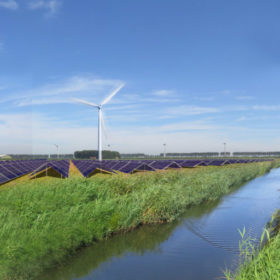
Vattenfall to build large scale wind-solar-storage plant in the Netherlands
The energy company will build a 38 MW solar, 22 MW wind and 12 MW battery project on one site. The first fully renewable hybrid power plant could be a blueprint for post-subsidy Germany. Vattenfall has an eye on German coalfields in particular.
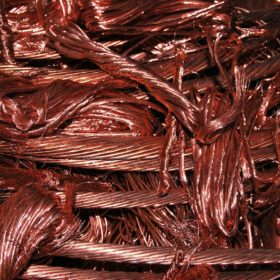
Car industry copper demand to surge 250% due to EVs
By considering use of the metal in charging infrastructure, analyst Wood Mackenzie has found higher demand from the mobility sector than is the case if only the volume of the material required for vehicle construction is examined.
