
Omani polysilicon factory secures $220 million
Oman Arab Bank is the latest investor in a major polysilicon manufacturing facility currently under development in Oman, after signing a $220 million financing agreement with project developers United Solar Polysilicon.
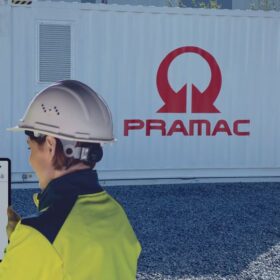
Pramac EMS features special modes for C&I battery storage sites
“Smart Self-Consumption” mode minimizes costs by charging the BESS during low-price periods and reducing grid dependency during high-price periods, while “External Control” mode enables participation in ancillary service markets.

JA Solar reveals TÜV Nord-certified results from desert solar module trials
A TÜV Nord-certified white paper demonstrating JA Solar’s DesertBlue module series says the modules, which are specifically designed for desert regions and wastelands, transcend industry benchmarks and offer an optimized levelized cost of electricity.

France deploys 1.5 GW of solar in Q3
The country’s cumulative installed PV capacity reached 29.7 GW at the end of September.

Huawei unveils FusionSolar 9.0 platform with AI, grid-forming tech
Huawei’s FusionSolar 9.0 is a new integrated solar-plus-storage platform featuring smart inverters, AI-driven management, and grid-forming capabilities to turn solar plants into active grid-support assets. It boosts efficiency, reduces costs, and enhances stability in weak grids with high renewable penetration, according to the company.
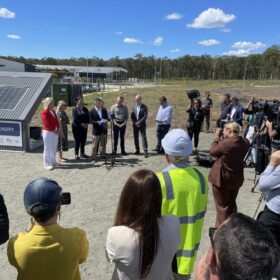
Sunman to build 500 MW solar panel manufacturing plant in Australia
Chinese manufacturer Sunman is to build a 500 MW per annum solar module production facility in the New South Wales Hunter Valley after securing funding support from both the state and federal governments.

Optimal solar-plus-storage sizing for heavy industry operation
Australian researchers developed a high-resolution energy modeling framework to assess how PV and batteries can supply 24/7 electricity to heavy industries, considering cost, grid interaction, and load flexibility. They found that, while technology cost reductions help, smart grid integration and flexible industrial operations are far more effective in lowering electricity costs and enabling 100% renewable energy use.
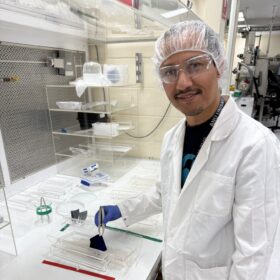
Antimony vs. phosphorous doping in solar wafer manufacturing
An international research team comprising scientists from Chinese module manufacturer Longi has investigated the resistivity distribution of antimony- and phosphorous-doped wafers used in solar cell manufacturing and have found that they offer comparable mechanical strenght. However, their work also showed that antimony-doped wafers have a more uniform resistivity, with a slight increase near the tail end.

Building the perfect perovskite, one layer at a time
A University of Cambridge-led team of researchers have demonstrated precisely controlled layer-by-layer epitaxial vapor growth of two-dimensional halide perovskite films in an industrially compatible process. Their findings could help develop more thermally stable perovskite solar cells.

Civ Robotics unveils AI-powered navigation tool to automate solar construction processes
Civ Robotics’ artificial intelligence (AI) powered navigation system tool is currently being tested at several large solar parks in the United States. The company says it eliminates the need for manual surveying with a sensor device fitted on a construction machine to guide operators to precisely place piles, pallets and PV modules.
