
US says China not undercutting domestic battery anode makers
The US International Trade Commission (ITC) has blocked the imposition of anti-dumping and countervailing duties on Chinese active anode material (AAM), providing a massive sigh of relief for the domestic battery storage sector.

Pexapark registers 30 European PPAs for 2.2 GW in February
Swiss analytics firm Pexapark finds February saw the highest monthly volume of new European power purchase agreements (PPAs) since February 2024, including the longest PPA observed in the European market to date.
India’s 35 GW of renewables at risk of curtailment, warns Crisil Ratings
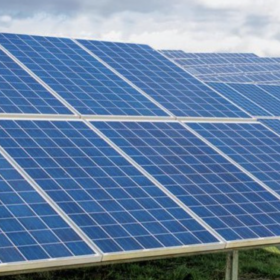
Crisil Ratings says rapid renewable energy additions and slow grid expansion could expose more than 35 GW of capacity to curtailment in India.
K2 Systems unveils elevated PV mounting solution for metal roofs
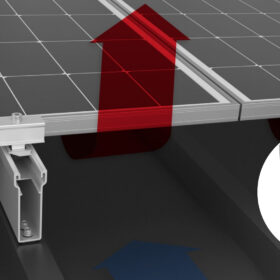
The K2 MultiRail High mounting system is a one-piece elevated solution with a height of 100 mm tailored to improve rear ventilation on metal roofs. K2 Systems says greater distance between modules and metal roof surface improves airflow and lowers module temperature, which can translate to higher annual energy yield.
Discovery of passivating pinholes in TOPCon solar cells paves the way for higher efficiencies
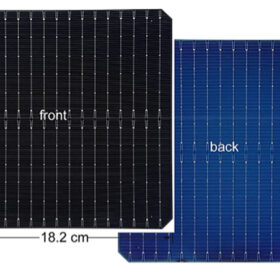
DAS Solar and Hebei University have identified two types of pinholes in TOPCon solar cells: harmful recombinational pinholes, which lack oxygen and cause carrier recombination, and beneficial passivating pinholes, which retain oxygen to enable efficient tunneling while maintaining interface passivation. Their work shows that optimizing oxide layer formation, back-surface polishing, and polycrystalline silicon deposition can increase passivating pinholes, boosting device efficiency and guiding industrial cell design.
Icelandic utility commissions solar-plus-storage for EV charging
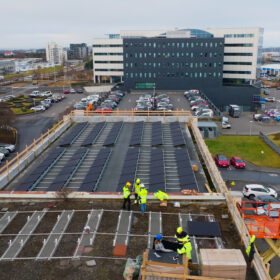
Icelandic utility ON Power has deployed a hybrid solar-plus-storage facility in Reykjavík to support electric vehicle charging infrastructure. The company says it believes such distributed systems will play a growing role in charging infrastructure in the future, even in Iceland’s renewables-dominated power system.
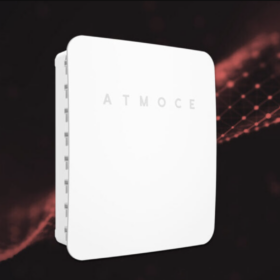
Atmoce launches backup box for three-phase emergency power retrofit
Atmoce has launched a backup box in Germany that adds three-phase emergency power to existing PV systems and works with the company’s M-ELV battery.
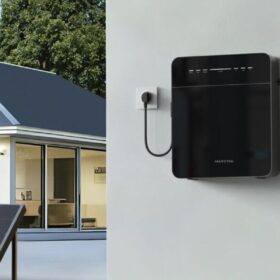
Marstek launches 2 kWh plug-in battery storage system
Marstek has unveiled a plug-in storage system with a two-kilowatt-hour capacity. The device plugs into a standard household socket and is designed to store solar power from balcony systems or draw in cheap electricity from dynamic pricing tariffs.
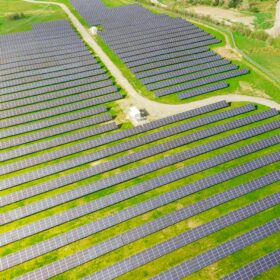
Italian solar sector gears up for cybersecurity regulations on PV systems over 100 kW
The Italian energy regulator is requiring PV and wind plants over 100 kW to install central controllers with remote active power control, with staggered compliance deadlines up to 2028. The rules, coupled with rising digitalization, are driving cybersecurity upgrades, AI-based monitoring, and grid-aware operational practices across the renewable energy sector.

Grid-forming BESS set to stabilize Australia’s hyperscale data centers
Australia has become one of the world’s most attractive destinations for hyperscale data centers, ranking among the top five to 10 markets globally by capacity. Drivers include large land availability in Renewable Energy Zones, renewable penetration exceeding 40% across the National Electricity Market (NEM), geopolitical stability, Five Eyes membership, and proximity to Asia-Pacific demand hubs.
