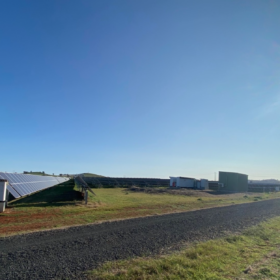
Investment rally coincides with renewables records in Australia’s NEM
A record five large-scale renewable energy generation projects totaling 1.2 GW reached financial close across Australia’s National Electricity Market (NEM) in the last quarter, but industry figures say more needs to be done to ensure investment momentum continues.
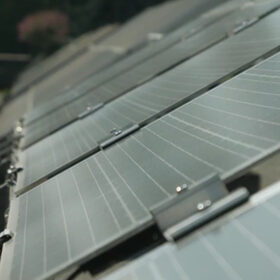
One-year perovskite solar module testing shows promising outdoor stability
Scientists at the European Commission Joint Research Centre tested two single-junction perovskite modules outdoors for one year and reported overall stable performance, supported by a new light-soaking preconditioning method to improve measurement reliability. While one module degraded significantly, the other maintained relatively stable efficiency with seasonal variations, highlighting the need for longer-term outdoor studies.
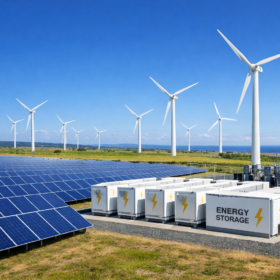
California batteries sustain near 24-hour solar run
On Feb. 1, California’s batteries bridged the solar gap with seamless precision. After discharging through the night until sunrise, they spent the daylight hours charging, then pivoted back to exporting power well past midnight – effectively sustaining the state on solar energy for a full 24-hour cycle.
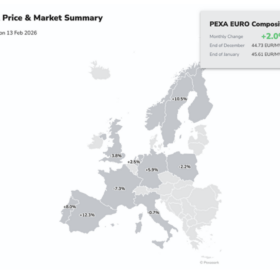
Pexapark records 12 European PPAs for 724 MW in January
Swiss analytics firm Pexapark finds January recorded roughly half the deal count and volume in new European power purchase agreements than the month prior.
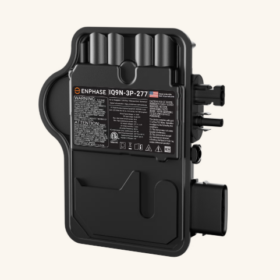
Enphase releases new control software for its IQ8, IQ9 microinverters
The US company said its Power Control software is designed to help installers reduce costs and streamline interconnection. Among its features is the ability to control aggregate system exports through software-based limits.
An ever-changing market: Delving into the heart of power purchase agreements
Cross-border VPPAs expose corporates to Basis Risk, causing settlement price gaps and weakening confidence in these hedging tools, contributing to a 35% drop in European PPA signings in 2025 amid complex market conditions. The market is shifting toward more structured, domestic, and hybrid PPAs, supported by BESS and modern IPPs, to better manage risk and realign buyers, sellers, and lenders.
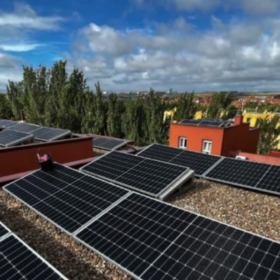
Spain’s behind-the-meter storage grows 119% in 2025
Spain installed 339 MWh of storage linked to PV self-consumption in 2025, up 119% year on year, according to APPA Renovables. The country added 1,214 MW of new self-consumption capacity, bringing the total to 9.6 GW.

Octopus Energy invests $1 billion in California clean technology
Octopus Energy will acquire a solar and storage project in California that is expected to be operational by July as part of its investment. The UK-based company, active across major markets in Europe, Australia, China and the United States, says California’s clean technology sector will “bring innovation, growth and returns to the UK.”
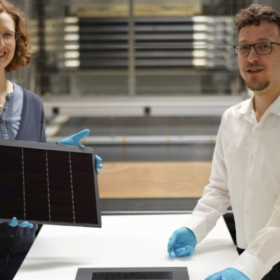
Fraunhofer ISE achieves 34.2% efficiency with III-V germanium PV module
Fraunhofer scientists have announced two efficiency records for III-V tandem modules. The team says its 34.2% efficiency III-V germanium PV module is the most efficient solar module in the world, while its 31.3% efficiency III-V silicon PV module is a record in its class.
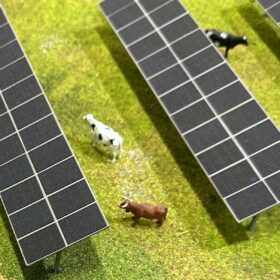
The impact of agrivoltaics on soil properties
New research shows how agrivoltaic systems can reshape soil by altering moisture, temperature, and microbial activity, creating heterogeneous zones under and between panels. Proper design and management can boost soil health and crop resilience, especially in degraded or arid regions, though long-term effects remain uncertain.
