US commercial solar sales teams move from micromanagement to alignment
For commercial & industrial (C&I) solar, getting the initial “yes” is only half the battle. The real challenge is keeping momentum and closing multi-stakeholder deals that often stall for no clear reason. After decades of relying on traditional sales techniques, I realized that success in today’s long-cycle projects demands a fundamental shift from micromanagement to vision alignment, trust-building, and team autonomy.
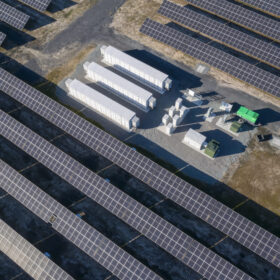
India launches 1.2 GW renewables-plus-storage tender
Solar Energy Corp. of India (SECI) has opened bidding for 1.2 GW of renewables with 4.8 GWh of storage to supply peak power under 25-year contracts.

Western wildfires, storms cut solar gains in the West while Eastern US sees boost
In a new weekly update for pv magazine, Solcast, a DNV company, reports that frontal systems, widespread wildfires and an omega block pattern contributed to highly mixed irradiance anomalies across North America in September. Solar conditions underperformed in much of the West and Midwest, while the Northeast, South, and parts of Canada recorded a strong month.
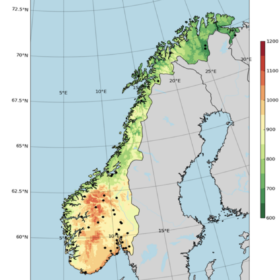
Rooftop solar could generate 30 TWh of electricity in Norway
A Norwegian research team has published Norway’s first full solar map, which calculates that deploying solar cells on top of existing roofs could generate up to 20% of the country’s current electricity needs.

Robots speed installation of 500,000 panels at solar farm in Australia
Engie and US-based Luminous have tested autonomous robots at the 250 MW Goorambat East Solar Farm in the Australian state of Victoria, completing panel installation ahead of schedule.
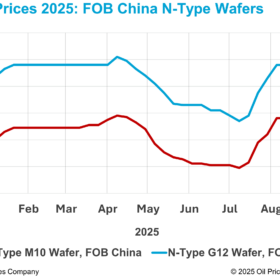
China wafer prices end four-week rally amid stable polysilicon, cooling demand
In a new weekly update for pv magazine, OPIS, a Dow Jones company, provides a quick look at the main price trends in the global PV industry.
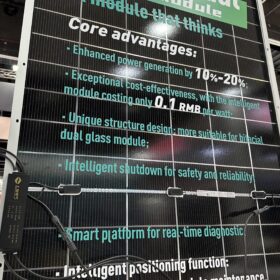
Solar module prices to rise 9% in Q4, says Wood Mackenzie
Wood Mackenzie says module prices will climb as China ends export rebates and consolidates polysilicon production.

‘Trust your knowledge and never hesitate to express your opinion’
This week Women in Solar+ Europe gives voice to Sandra Kupiszewska Stylec, Revenue Management Director at Poland’s Keno sp. z o.o. She says that, without cohesion, even the most diverse teams may struggle to innovate. “Your voice is valuable, and your perspective deserves to be heard. This industry is dynamic and variable; there are no fixed rules that can’t be questioned or reimagined,” she states.

Super typhoon Ragasa devastates solar and wind farms in southern China
Typhoon Ragasa tore through China’s Guangdong province last week, crippling solar and wind assets and exposing weaknesses in cost-cutting design standards.

New research confirms rooftop PV affects urban temperatures, cooling demand
Using Lyon as a case study, an international research team has simulated the effects of rooftop photovoltaic (PV) coverage in an urban area at three levels: 25%, 60%, and 100%. The results have shown that solar panels can raise daytime temperatures by up to 0.72 °C, while cooling nighttime temperatures by up to 0.42 °C. In addition, daytime air conditioning demand has decreased by about 5%.
