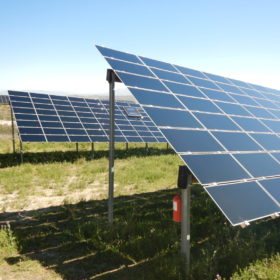
When does revamping pay off?
With projects in many PV markets aging past the 10-year mark – with major leaps in technology having occurred in that time – revamping is a popular topic among asset owners. pv magazine spoke with Asier Ukar, general manager of the Spanish subsidiary of German engineering company PI Berlin, to uncover the benefits of revamping PV projects with new components and also to examine the challenges and risks involved.

Tata Power secures 84 MW rooftop solar contract in Indian state of Kerala
Tata has landed a $54 million deal from Kerala State Electricity Board Limited to install the rooftop capacity for domestic consumers across the state.

Chinese PV Industry Brief: Solar glass companies see profits soar in first half of 2021
A series statements from China PV glass companies showed the entire PV glass industry benefited from the accelerated development of solar PV and achieved outstanding performances in the first half of 2021.

The Hydrogen Stream: Italy’s Eni lays out plans in Algeria and Egypt, UAE joins race with help from Japan
Italian energy company Eni is partnering with local companies in Algeria and Egypt to explore the possibility of producing green and blue hydrogen in the North African countries. The United Arab Emirates is also collaborating with Japanese partners to develop the country’s hydrogen sector, while in New York, hydrogen has arrived in Long Island.
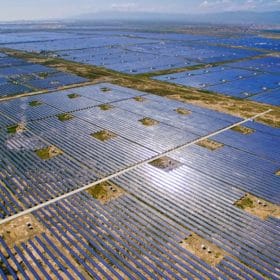
China solar PV demand could surpass 100 GW in 2022; ‘massive’ production overcapacity predicted
According to Asia Europe Clean Energy (Solar) Advisory Co. Ltd, demand for solar PV in China could “effortlessly” surpass 100 GW in 2022, following a year of “flat” demand in 2021. It adds that a “massive overcapacity” situation in the production sector is looming. Meanwhile, the distributed solar PV market is on track for huge growth, with potential for annual demand to reach upwards of 20 GW+ from next year.
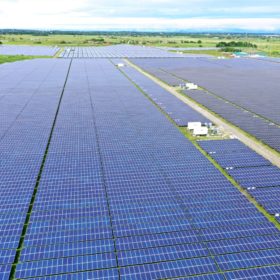
63 MW solar project completed in Philippines as part of 5 GW renewables plan
A 63 MWp solar project has been completed in the Philippines by Modern Energy Management (MEM) for AC Energy. The Gigasol project is part of the latter’s plan to roll out 5 GW of renewable energy capacity by 2025.
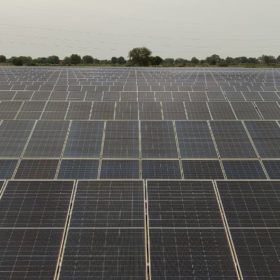
India’s Jakson Corporation commissions 50 MW solar plant in Uttar Pradesh
The 200-acre solar plant is located in the Kheragarh district of Agra. It benefits from a 25-year, fixed-tariff power purchase agreement with Uttar Pradesh Power Transmission Corporation Limited.

Cash-strapped GCL prepares to pay $189 million to ease project sell-off
The polysilicon maker, which is disposing of the solar farms managed by its New Energy business to pay down debt, is preparing to pay more than RMB1.2 billion to buy a minority stake in a subsidiary it already owns the rest of.
Tata Power vows to exit coal by 2050
Tata Power says it will use hybrid technologies, floating solar, battery storage, and green hydrogen to scale back its use of thermal power.

Q Cells, Samsung sign ‘zero energy home’ partnership
Q Cells and Samsung have agreed to combine their hardware and software platforms to develop ‘zero energy homes,’ with on-site energy production and use.
