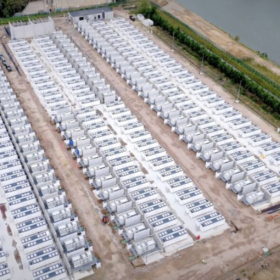
Brazil’s LRCAP battery auction demand estimated at nearly 3 GW
Brazil’s second Long-term Reserve Capacity Auction (LRCAP) of 2026 has contracted 501 MW of thermoelectric capacity, leaving an estimated 3 GW of remaining demand to be addressed in a forthcoming battery storage auction expected later this year.
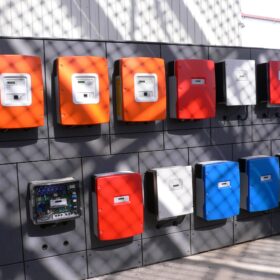
New PV inverter efficiency metric reflects local solar conditions
Researchers in Brazil have developed a weighted PV inverter efficiency methodology that accounts for country-specific solar irradiance and operating conditions. The approach is designed to address the limitations of international metrics by incorporating variables such as input voltage and maximum power point tracking (MPPT) performance.
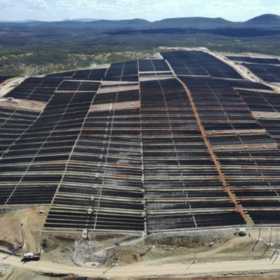
Brazil’s 439 MW Bom Jardim solar site begins testing phase
The Bom Jardim PV complex, a 439 MW solar installation in Icó, Brazil, has begun test operations on four of its 10 plants, with full commercial commissioning expected by December 2027.

Brazil targets 107 GW of solar by 2035 under energy plan
Brazil has opened consultations on its PDE 2035 energy plan, which projects 107 GW of solar by 2035 – including 78 GW of distributed generation – with battery storage reaching 7 GW, or 2% of the power mix.

The impact of land slope on agrivoltaics feasibility
Brazilian scientists have developed a slope-based framework for agrivoltaics, finding that sites below 15% gradient offer the best balance between agricultural suitability and technical feasibility. Their review of 30 studies shows that steeper terrain can host PV systems with adapted designs, land-use limits, erosion risks, and rising installation costs.
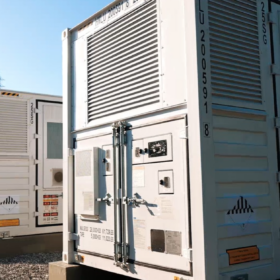
Brazil reserve battery auction rules near finalization with 20 GW lined up
Brazil’s electricity regulator has approved March reserve capacity auctions for thermal and hydro plants with more than 125 GW registered, while guidelines for a separate battery storage auction remain pending even as over 20 GW of projects are under development.

Brazil curtails 20% of solar and wind output in 2025, with losses at $1.2 billion
Brazil curtailed about one-fifth of its solar and wind generation in 2025, wasting an estimated BRL 6.5 billion ($1.23 billion), as grid constraints and demand mismatches pushed the power system close to operational safety limits on 16 days, according to a report from Volt Robotics.
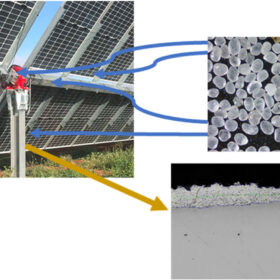
The impact of sand erosion on mounting structures in large-scale PV plants
Researchers in Spain have tested the erosion resistance of common galvanized coatings using both free-falling sand and forced-air sand-impingement methods. The study found that continuously galvanized steel coatings showed the lowest erosion rates, outperforming HDG and Zn-Al-Mg coatings.

The Hydrogen Stream: Scatec-led 100-MW green project in Egypt to step operations in the coming months
The consortium expects to reach Final Investment Decision (FID) on the full-scale project in the Ain Sokhna Industrial Zone in the coming months, while Brazil’s Federal Court provisionally ordered the suspension of construction activities of Solatio’s project in the State of Piauí.

Brazil eyes gigawatt-scale energy storage growth in 2026
The Brazilian Association of Energy Storage Solutions (ABSAE) predicts that installations in Brazil’s commercial and industrial (C&I) segment should exceed 2 GWh in 2026. In addition, the group expects procurements of approximately 8 GWh in the auction scheduled for April, which will procure projects for delivery from 2028.
