
Chinese module makers land another two big overseas orders
GCL and Canadian Solar provide further proof of the solar boom that is gathering pace around the world even as attention focuses on the Chinese market.
Canadian Solar sees turnover and profits retreat
The Chinese-Canadian manufacturer reported a 1% decrease in sales in the third quarter, with net profit falling 19%, to US$55.2 million. Quarterly shipments were up significantly year on year, from 1.59 GW in July-to-September last year to 2,387 MW this time around. The company expects to ship up to 8.5 GW of panels and achieve turnover of up to US$3.16 billion this year.
Brazilian regulator wants to reduce net metering credit and introduce grid fee
Electricity regulator ANEEL has proposed applying a fee for solar systems with up to 5 MW of generation capacity and reducing energy payments for participants in the nation’s net metering program.
Spain and Brazil the world’s ‘solar investment hotspots’ but eyes on Vietnam
Analysts at Fitch Solutions have published a report singling out Spain and Brazil as ‘outperformers’ in the global solar market and labelled Vietnam the “market to watch”. The analysts expect surging growth from the Southeast Asian nation to continue in the coming decade.

Average solar power price in Brazilian A-6 auction reaches $20.52/MWh
Only 530 MW of the 2.97 GW of renewable energy generation capacity contracted in the procurement exercise went to solar. Eleven solar projects were successful and their final electricity prices were far below those offered by competing technologies.
Canadian Solar wins 394 MW of solar in two private auctions in Brazil
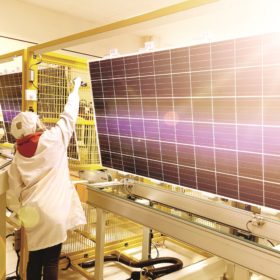
After emerging as the recipient of most of the Brazilian government’s public allocation of generation capacity, the Canadian-Chinese manufacturer has secured a large share of projects in auctions held by power companies Copel and, probably, Cemig.
Emerging markets help new faces into list of world’s top EPC providers
Although the Wiki-solar website ranking only gives a snapshot of PV project engineering, procurement and construction contracts outside China, it is nevertheless a useful indicator of the changing shape of the global solar market.
Brazil’s Copel contracts 128 MW of solar and wind in own auction
The Paraná-based energy provider will buy renewable energy under a 15-year power purchase agreement. The auction’s winners and final prices were not revealed.

The weekend read: The specter of PV protectionism
Trade tariffs are spreading across the global PV industry. The United States has been especially active with its sandwich of old antidumping and countervailing duties coupled with new Section 201, 232 and 301 duties. Some of these are part of the Sino-U.S. trade dispute; others impact not only Chinese producers, but manufacturers around the world. So, what will be the impact of this new era of PV protectionism on the solar sector?
Brazil’s Cemig contracts renewable power from 197 MW of project capacity
Solar and wind projects selected in the company’s latest clean energy procurement exercise have been awarded a 19-year power purchase deal, starting from 2023. Cemig has now contracted green power from 780 MW of renewable project capacity in three tender rounds held since June last year.
