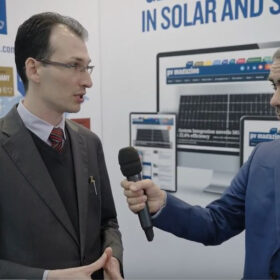
Intersolar 2023: ‘[This] will be the year of large-scale solar for Brazil’
Rodrigo Sauaia, the president of the Brazilian Association of Photovoltaic Solar Energy (Absolar), recently spoke with pv magazine about power purchase agreements, regulated auctions, macroeconomics conditions, and electricity prices in Brazil. He said the Latin American country could add 4.6 GW of utility-scale solar capacity this year, as well as another 5.5 GW from distributed generation.
Reliability analysis of n-type modules
In this pv magazine Webinar, we’ll examine the reliability profile and technical performance of n-type modules. We will explore a roadmap to TOPCon module production and hear from industry experts about the advantages of this new technology that’s gaining traction for large-scale solar installations.

Maxeon’s PV module capacity hits 2.5 GW in Mexico
Maxeon Solar Technologies says it has invested $70 million to upgrade its panel factory in Mexicali, Mexico, to 1.8 GW. The remaining capacity is provided by a 700 MW facility that the Singapore-based manufacturer operates in Ensenada.
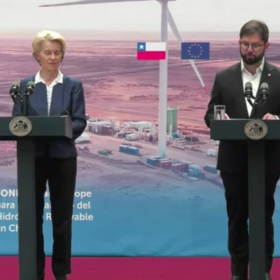
The Hydrogen Stream: Europe signs deals with Chile, Argentina, Brazil
The European Commission has agreed to ramp up hydrogen sector investments in Chile, Argentina, and Brazil, while Norsk Hydro has successfully produced the world’s first batch of recycled aluminum with hydrogen-fueled production methods.
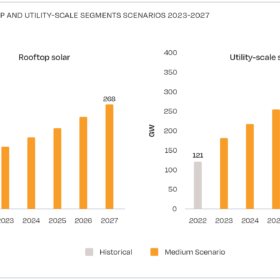
Global rooftop PV additions soar by 50% to 118 GW in 2022
The world installed 239 GW of new solar capacity in 2022, according to SolarPower Europe. The rooftop PV segment accounted for 49.5% of additions – the highest share in the past three years. The rooftop sectors in Brazil, Italy, and Spain grew by 193%, 127%, and 105%, respectively.
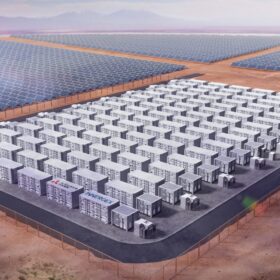
Chile announces $2 billion tender mechanism for energy storage
The Chilean authorities plan to hold the first procurement exercise for large-scale storage projects in 2024, with the first systems expected to go online in 2026.
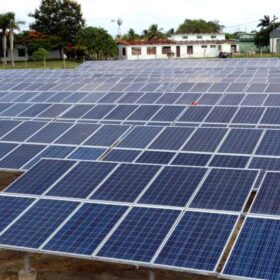
Cuba to hold 60 MW solar tender
The International Solar Alliance (ISA) is helping Cuba to launch its first solar energy procurement exercise. Interested developers have until July 20 to submit their offers.
Global solar additions to hit 310 GW in 2024, says IEA
The International Energy Agency (IEA) said in a new report that solar will remain the main source of global renewable capacity expansion in 2023, accounting for 286 GW. In 2024, the figure is set to grow to almost 310 GW, driven by lower module prices, greater uptake of distributed PV systems, and a policy push for large-scale deployment.
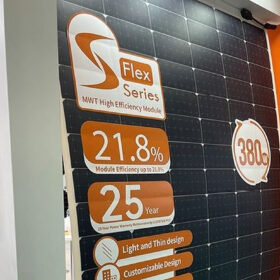
Weekend Read: Flex generation
A new generation of flexible, lightweight modules is entering the market. With back contact technology offering its own form of design flexibility and robustness, the new products could crack a hard-to-address market segment.
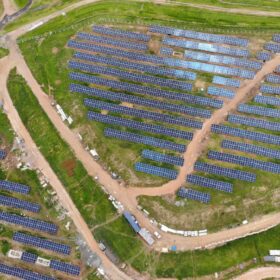
Brazil hits 30 GW milestone
The country has added 15 GW of new PV capacity since January 2022. In 2023 alone, it deployed 4.4 GW of new solar power, of which 3.15 GW comes from distributed generation and 1,24 GW from utility scale PV.
