
Chad’s installed PV capacity hits 110 MW, supplying 37% of electricity
Chad has one of Africa’s highest solar penetration rates, a result of a small power system with just 12% electrification, as large-scale solar and storage projects gather pace around N’Djamena, even as political uncertainty over oil revenues constrains faster deployment.

Chad starts first utility-scale solar plant with 50 MW and storage
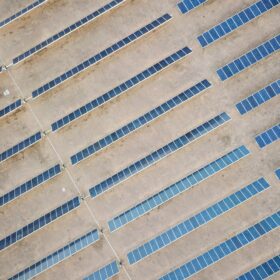
Abu Dhabi-based Global South Utilities has commissioned Chad’s first utility-scale solar plant, a 50 MW facility in N’Djamena with 5 MWh of storage to supply 274,000 homes.
Chad plans 520 MW of solar by 2030
Chad plans to raise $1.1 billion to add 886 MW of power capacity, the majority of which is expected to be solar.
African PV imports from China up 60% in one year, says Ember
Think tank finds evidence of “take-off” for solar in Africa, with import growth is spread across the continent. Ember analysis notes import surge has potential to markedly increase electricity generating capacity in some countries.
How to combine photovoltaics with rainwater harvesting
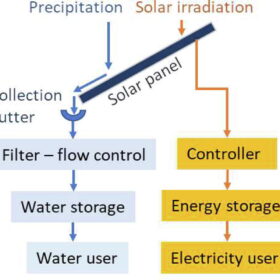
Scientists have developed a system that harvests rainwater running off PV panels for household use or hydrogen production. Their analysis showed that, in the southern Sahel, the system can meet both the energy and water requirements for electrolysis, with surplus rainwater covering up to 50% of a household’s daily water demand.

Convalt Energy commits to community solar plants in Chad
US-based Convalt Energy has signed a memorandum of understanding with Chad’s Ministry of Water and Energy for three community solar plants totaling 3 MW, along with 1.5 MWh of battery storage.
African solar looks beyond donor nations for investment
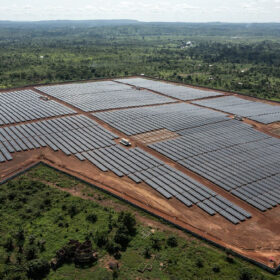
Multilateral organizations the World Bank and African Development Bank (AfDB) have played a key role in the development of African solar and want to attract more private capital to a continent with at least 40% of the world’s solar irradiation but currently only 1% of its PV generation capacity.
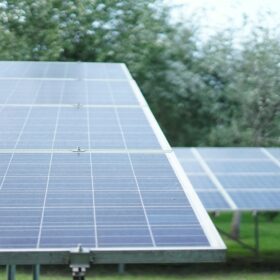
Chad opens tender for solar-diesel hybrid projects with battery storage
The authorities in Chad have launched a tender for solar-diesel hybrid projects with battery storage, featuring a combined 4 MW of solar capacity and 2 MWh of daily storage.
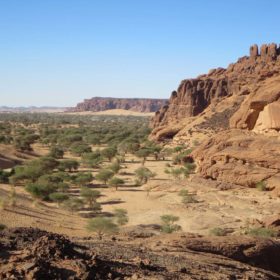
Chad launches tender for engineer to oversee 30 MW PV plant construction
The Republic of Chad has started accepting applications for a consulting engineer to supervise the construction of a 30 MW (AC) ground-mounted solar power plant – with a 60 MWh storage system, 90 kV line and 90/33 kV substation – near the national capital, N’Djamena.
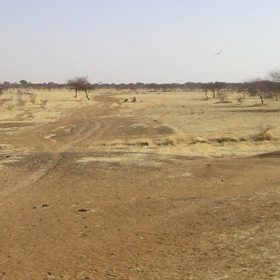
Desert to Power secures $300 million of public money
Private Infrastructure Development Group recently made a non-binding commitment in Brussels to a provide funds for a project that aims to bring 10 GW of solar to Africa’s Sahel region.
