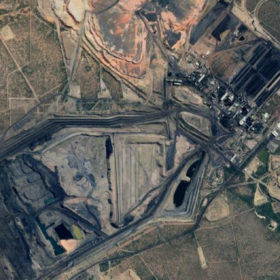
China and India to drive record world coal demand next year
Advances in solar power and other clean energy technologies have failed to keep up with demand for electricity as economies rebound from the Covid crisis and China and India’s fossil fuel appetite will ensure the world stays well short of what is needed for a net zero 2050 for at least the next three years.
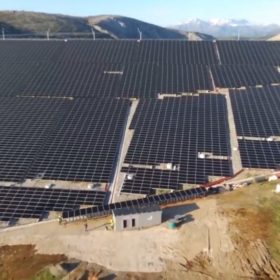
Albanian hydropower dam is now linked with 5.1 MW of solar
Albanian utility KESH has built a 5.1 MW ground-mounted solar park at its hydropower plant in Vau i Dejës. The company will operate the PV facility in combination with hydropower production.

PGE to build 100 MW solar park in Poland
Polish utility PGE Energia Odnawialna has secured permits to build 200 MW of solar capacity in its home market. It soon plans to start building a 100 MW solar park in southeastern Poland’s Subcarpathia province.

North Macedonia streamlines two PV projects totaling 155 MW
The two projects are both located in eastern North Macedonia and are expected to require an overall investment of €116 million.
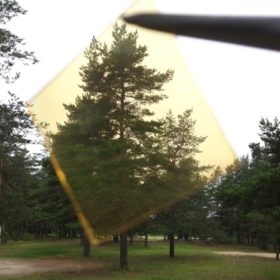
Semi-transparent antimony trisulfide PV cell for solar window applications
The 5.5%-efficient cell was fabricated through a low-temperature, two-step manufacturing process that is compatible with existing window glass manufacturing technology. Cells made with 70nm antimony trisulfide films achieved the best fill factor of around 57%, while the highest power conversion efficiencies were achieved with films ranging from 70 to 100nm.
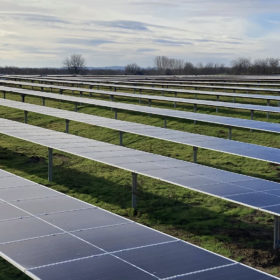
Utility scale solar goes merchant in Hungary
Photon Energy has deployed its first merchant PV project in Hungary. The company said the €1 million plant may be the first in a series selling power to the spot market. In an interview with pv magazine, Hungarian renewable energy specialist, Ferenc Kis, stated that these projects may become more frequent in the future, due to new coordinated grid connection capacity allocation.
Higher module prices impacting Czechia’s rebate program for small solar parks
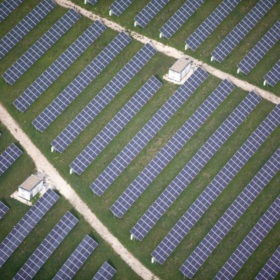
The Czech authorities have extended, to February, the deadline to submit PV projects of up to 1 MW for the rebate scheme for small sized, ground mounted photovoltaics. According to Jan Krčmář, chairman of the Czech Solar Association, the lower than expected interest in the program may also be down to higher PV component prices.
Puffer fish inspired floating PV structure
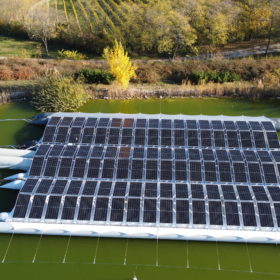
With a new system for floating photovoltaic power plants, engineers from Germany want to make the application cheaper, higher-yielding, and safer. The result is somewhat reminiscent of a pufferfish, which also gave the system its name.
Vershina Group secures PPA for 600 kW project in Russia
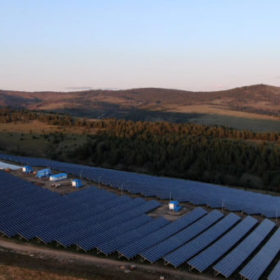
The solar array will cover around 30% of the electricity needs of a Leroy Merlin hypermarket in Volzhsky, in Russia’s Volgograd region.
Perovskite solar cells for electronic shelf labels
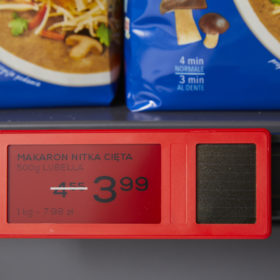
The solar-powered electronic shelf labels are intended for use in retail stores. Users are enabled to change prices centrally and synchronously across all retail stores within a chain.
