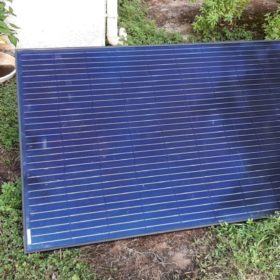
Solar kit for gardens and balconies, from France
French start-up Ekwateur is offering a solar kit consisting of a 330 W panel, a micro-inverter, a metallic structure, a monitoring sensor, and a few cables.
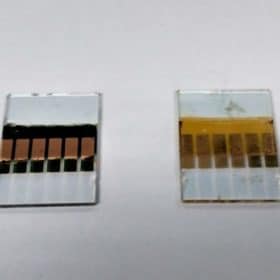
Solid-state solar cells based on metal-organic framework nanomaterials
Spanish scientists have fabricated solid-state PV cells with two different porous nanomaterials. Although low in terms of efficiency, one of the cells built with the MIL-125(Ti) metal-organic framework nanomaterial exhibited better photovoltaic performance than similar devices.

Silicon carbide passivating contact for 24%-efficient crystalline solar cells
The special passivating contact is claimed to feature high transparency, good conductivity, and at the same time, to offer enough hydrogenation for passivation. The cell built with this contact achieved an open-circuit voltage of 725 mV, a short-circuit current density of 40.87 mA cm−2, and a fill factor of 80.9%. Its certified efficiency was 23.99%.

German organizations outline new standards for agrivoltaics
Representatives from 15 agricultural and solar businesses, research entities, and certification bodies in Germany have developed DIN SPEC 91434, a new set of proposed standards for agrivoltaics.
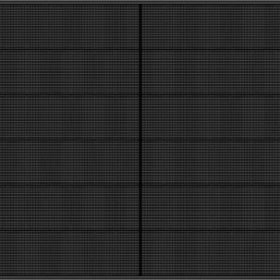
REC launches 405 W black solar module with gapless design
The new heterojunction panel series features an efficiency of up to 21.9 % and an operating temperature coefficient of -0.26% per degree Celsius.

Italian ruling could facilitate more PV development
Italy’s Council of State has issued a new ruling that bodes well for renewables development. The consultative body has clarified a number of principles related to permits, but caution is still required.

How to attract bees into solar parks
According to new research from the U.K., solar parks may help maintain natural habitats for pollinators that could be, otherwise, destroyed by intensive farming. The study also highlights that biodiversity could be both positively and negatively affected by solar parks and associated land-use change.
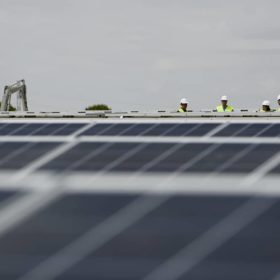
Europe’s largest PV plant takes shape in Spain
The Trillo photovoltaic complex will have an installed capacity of 626 MW. Construction is scheduled to begin on May 7.

Higher performance with bigger modules a ‘no brainer’
Jan Bicker, who replaced Steve O’Neil as the CEO of REC on March 1, says that one of his top priorities is the ongoing development of the company’s Alpha PV modules. REC plans to unveil new, more powerful panels soon, and will make a final decision on a new factory in France in June.
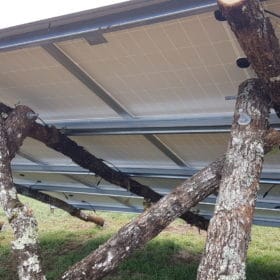
Solar park built on rough wooden structures comes online in France
French company Céléwatt energized its 250 kW ground-mounted array, built with mounting structures made of raw oak wood.
