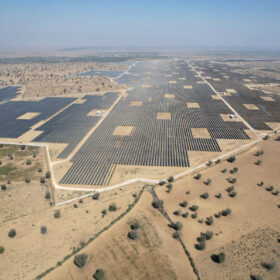
India achieves 50% clean power capacity five years ahead of target
India reached 484.82 GW of total installed power capacity as of June 30, 2025, with 242.8 GW from non-fossil fuel sources, including 8.8 GW nuclear, 49.4 GW hydro, and 184.6 GW from renewable energy.

SAEL Industries to build 5 GW solar cell and module plant in India
SAEL Industries Ltd. will invest INR 82 billion ($955 million) to build a 5 GW solar cell and module plant in India. The facility will raise its total manufacturing capacity to 8.5 GW.

Shakti Pumps invests $1.4 million in solar manufacturing
Shakti Pumps (India) Ltd. has invested INR 120 million ($1.4 million) in its solar-focused subsidiary, Shakti Energy Solutions Ltd, in exchange for equity shares to support manufacturing expansion.
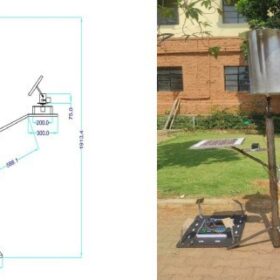
Solar-wind tree based on 2-axis tracking
Scientists in india have created a wind-solar system in a tree shape, which combines wind turbines and a PV system with two-axis trackers. The team constructed a hardware-in-the-loop prototype that can generate up to 444.5 Wh per day.
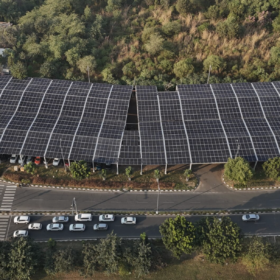
Captive solar gaining ground in India’s industrial manufacturing hubs
Industrial regions in Punjab, Haryana, Maharashtra, Gujarat, and Tamil Nadu are emerging as key markets for captive solar in India. High electricity tariffs, state-level incentives, and environmental targets from export-focused firms are accelerating adoption of distributed solar across the country’s industrial sector.

New PV system sizing approach based on jellyfish search algorithm
Researchers have used the jellyfish search algorithm to optimize solar PV distributed generation placement and sizing. They have tested the algorithm on an IEEE 33-bus system, with one, two, or three PV deployment scenarios, and compared its performance with that of a dozen of competing optimization techniques.
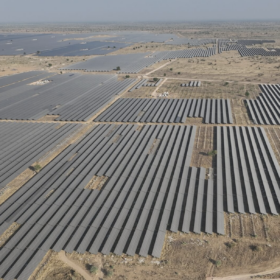
India installs 22.5 GW of solar capacity in fiscal 2025
India added 17.4 GW of utility-scale solar and 5.15 GW of rooftop PV capacity in fiscal 2025, according to JMK Research. Rajasthan led new installations with 6.5 GW, followed by Gujarat with 3.6 GW and Maharashtra with 2.3 GW.

Shakti Pumps raises funds to build 2.2 GW solar module plant in India
Shakti Pumps (India) Ltd. has raised INR 2.93 billion ($34.2 million) through a qualified institutions placement to fund a greenfield 2.2 GW solar cell and module manufacturing facility in central India.
Indian manufacturer opens solar frame factory
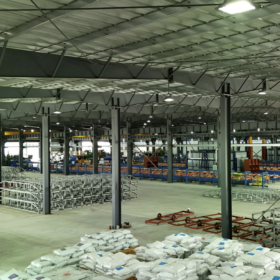
H&H Aluminium Pvt. Ltd. has opened a new solar panel frame manufacturing plant in India, with an annual production capacity of 24,000 metric tons.
First attempt to build tandem solar cells based on perovskite, transition metal dichalcogenide
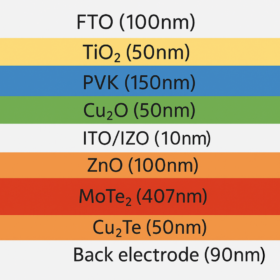
Scientists in India have proposed to design new tandem solar cells using transition metal dichalcogenide as an absorber material for the bottom PV device. Their simulations showed these tandem cells may reach an efficiency of over 35%.
