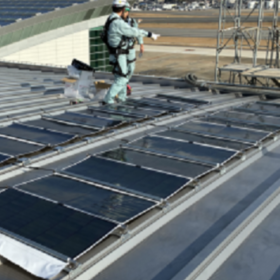
Japanese airport terminal hosting chalcopyrite solar modules
In two separate projects Japan-based Kyuden Mirai Energy and Nissan Motor are demonstrating the use of flexible, glass-free chalcopyrite PV panels provided by PXP Corporation.

Scandium doping stabilizes sodium-ion cathodes in new study
A team at Tokyo University of Science (TUS) has identified a structural mechanism by which adding small amounts of scandium to layered sodium manganese oxide cathodes slows the degradation that typically limits sodium-ion battery lifetimes.

Flexible front cover tested for glass-free CIGS devices
Researchers in Japan have developed an effective encapsulation with a PET front cover for copper indium gallium diselenide mini-modules. The lab devices withstood damp heat tests, retaining approximately 97 % of initial efficiency after 3,600 h.

Japan plans to tighten laws around large-scale solar
Japan is set to impose stricter environmental oversight on future large-scale solar projects. The government may also discontinue financial support under its feed-in tariff and feed-in premium schemes for large, ground-mounted solar beginning April 2027.

Researchers find sodium-ion batteries using hard carbon anodes can intrinsically charge faster
Researchers at Tokyo University of Science showed that sodium-ion batteries with hard carbon anodes can charge faster than lithium-ion batteries by using a diluted electrode method that reveals sodium insertion is intrinsically quicker than lithium.
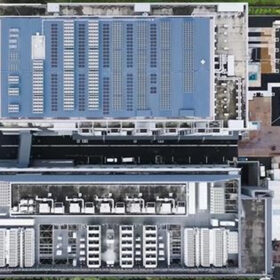
Canon testing solar at Japanese data center
Canon IT Solutions has begun testing a solar PV system to power its Tier 4 data center in Nishitokyo, aiming to boost renewable energy use and reduce costs. The system is expected to generate around 69 MWh annually and enhance power resilience during emergencies.

Belgium’s Virya Energy acquires BayWa re’s Japan solar business
Virya Energy will leverage BayWa re’s local team in Japan to strengthen its position in the country’s lucrative power purchase agreement (PPA) market. The Belgian company will also rely on its Asian affiliate, Constant Energy, headquartered in Thailand.
The Hydrogen Stream: Europe forecasts €240 billion for hydrogen grids to 2040
The European Commission says its new grids package includes €240 billion ($281.8 billion) for hydrogen networks to 2040, alongside fresh Italian State aid for clean tech deployment.
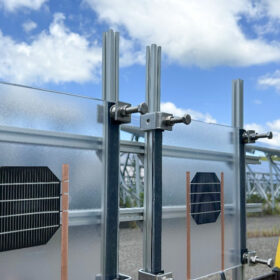
Perovskite solar testing field commissioned in Japan
Kanazawa University has begun long-term outdoor testing of tandem perovskite solar cells in collaboration with Toshiba. The research project aligns with Japan’s broader push to scale perovskite PV technologies toward large deployment by 2040.

Japan’s 26th solar auction concludes with average final price of $0.046/kWh
Japan has allocated 75.3 MW of PV capacity in its latest procurement exercise. The lowest price in the auction was JPY 4.97 ($0.032) /kWh.
