
Weekend Read: Giga and giga
pv magazine Australia’s Natalie Filatoff reports on the benefits of planning vast solar project pipelines, and the barriers faced by those who dare to dream big.
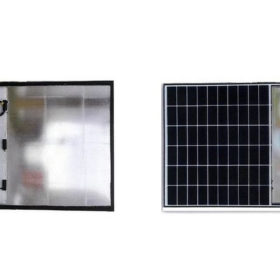
Water jet tech to recover glass from end-of-life solar panels
Japan’s Shintora Kosan has developed a novel water jet technology to recover glass from end-of-life PV modules. It says it can pulverize the solar cells and the backsheets without damaging the glass.
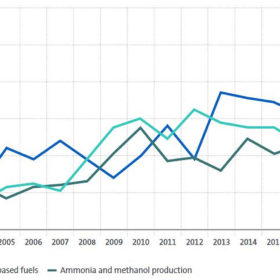
Europe, Japan led global hydrogen patents in 2011-20 period
The European Patent Office (EPO) and the International Energy Agency (IEA) have released a new report on hydrogen tech patents. They noted the rise in electrolysis innovation and said automakers and chemicals suppliers are leading the way with hydrogen patents.
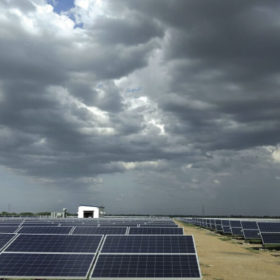
Japan’s Okinawa prefecture curtails solar generation for first time
Japan’s Okinawa Electric Power Co. has introduced PV curtailment measures in response to high solar radiation levels and low energy demand.

A closer look at potential-induced degradation in solar cells
UK scientists have examined the impacts of potential-induced degradation (PID) in solar cells and modules, based on a field study from a 1.2 MW PV system in Spain. Meanwhile, in a separate study, scientists in Japan have created a model for one of the less-investigated PID mechanisms, creating a model of its progress that will be useful in future research and mitigation efforts.
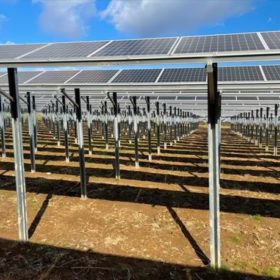
Mibet commissions 4 MW agrivoltaic project in Japan
Mibet, a Chinese mounting system supplier, has completed what it claims is the biggest agrivoltaic installation in Japan. The solar modules for the 4 MW project in Fukushima prefecture were installed on Mibet’s agrivoltaic mounting system.
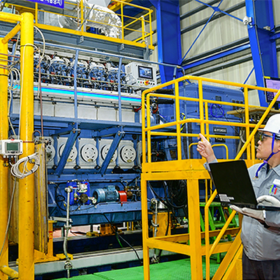
The Hydrogen Stream: Hyundai inches closer to hydrogen engine development
Hyundai Heavy Industries has revealed plans to develop a hybrid engine with more hydrogen by 2023, and a complete hydrogen engine by 2025. Japan, meanwhile, has signed hydrogen-related agreements with Saudi Arabia and Oman.
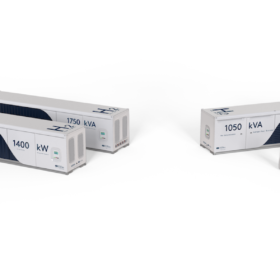
The Hydrogen Stream: EODev launches packaged hydrogen generators for land, sea applications
EODev will start delivering hydrogen generators by the end of 2024 to countries in the West and the Middle East, with a focus on regions with public incentive policies. German companies, meanwhile, have agreed to convert a gas pipeline network into a hydrogen pipeline network.

Tokyo introduces mandatory PV requirements for new buildings, homes
The Tokyo Metropolitan Assembly has approved new provisions to make solar installations mandatory for new homes. The rules apply to homes with total rooftop areas of more than 20 square meters, and to buildings with rooftops smaller than 2,000 square meters.
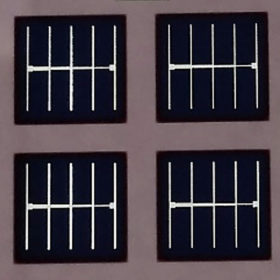
Heterojunction germanium solar cell with 8.6% efficiency
Japanese scientists have developed a heterojunction germanium solar cell with the biggest area ever achieved for the tech. It has an open-circuit voltage of 291 mV, a short-circuit current of 45.0 mA/cm2, and a fill factor of 0.656.
