Kuwait broadens bidding pool for 500 MW PV tender
The selected independent power producer will be awarded a 30-year power purchase agreement (PPA) by the Ministry of Electricity and Water and Renewable Energy.
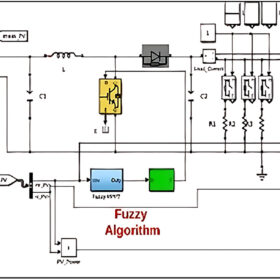
Optimizing PV system tilt angle, MPPT using fuzzy logic controller
Researchers in the Middle East have developed a fuzzy logic controller that simultaneously optimizes the tilt angle of PV systems and performs maximum power point tracking (MPPT). Year-long simulations indicate that the proposed approach increases power generation by approximately 20%.

Kuwait shortlists five bidders for 500 MW solar project
The solar facility is planned for construction in the Jahra Governorate, with the selected developer to be awarded a 30-year power purchase agreement.

Kuwait forecast to reach 2.9 GW of solar by 2030, 10.1 GW by 2035
Kuwait’s solar capacity, which stands at around 50 MW today, is expected to surpass 1 GW in 2029 before increasing rapidly over the first half of the next decade to surpass 10 GW by 2035, according to forecasts made by Rystad Energy.
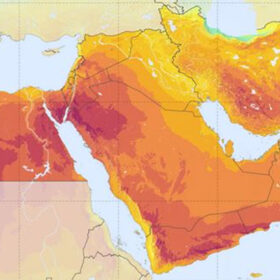
New method for PV site suitability mapping
Scientists in Malaysia have developed a novel deep-learning method for PV suitability mapping. Applying the new approach to the Middle East, they found that approximately 5.8% of the region has very high suitability and 11.5% is highly suitable for PV energy development.

Kuwait reveals prequalified bidders for 1.1 GW solar project
The Al Dibdibah Power and Al Shagaya Renewable Energy Phase III Zone I solar project will be built at the Shagaya Renewable Energy Park in Jahra Governorate, located west of Kuwait City.
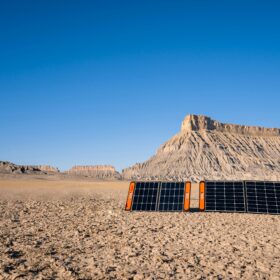
Reducing PV module temperature with air convection
Scientists have analyzed how forced convection PV, free convection with finned plate PV, and forced convection with finned plate PV can reduce solar module temperatures under the climate conditions of Lebanon.
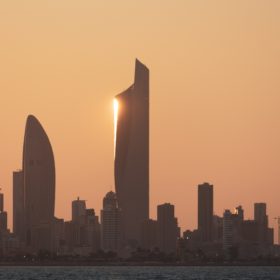
Kuwait launches tender for 500 MW of solar
The Kuwait Authority for Partnership Projects (KAPP) is tendering two proposed solar plants in the Jahra region of Kuwait.
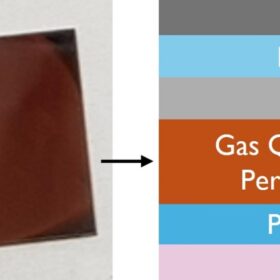
Gas quenching with helium, argon for more stable perovskite solar cells
Kuwait University researchers investigated the relationship between the molecular weight of the quenching gas and the morphology of perovskite films used in solar cells, finding that argon and helium extended device lifetimes compared to using the more conventional nitrogen.

Why and where solar PV succeeded in Arab Gulf states
A US-UAE research team has investigated how regulatory regimes impacted solar power deployment across six Arab states of the Persian Gulf. Their findings show that the predominant role of the state is expected to continue.
