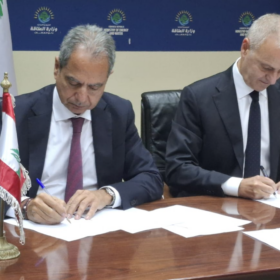
Lebanon inks three PPAs for 45 MW of solar
Lebanon’s Ministry of Energy has entered into power purchase agreements with France’s CMA CGM for three solar projects each with a capacity of 15 MW.
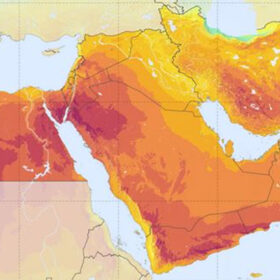
New method for PV site suitability mapping
Scientists in Malaysia have developed a novel deep-learning method for PV suitability mapping. Applying the new approach to the Middle East, they found that approximately 5.8% of the region has very high suitability and 11.5% is highly suitable for PV energy development.
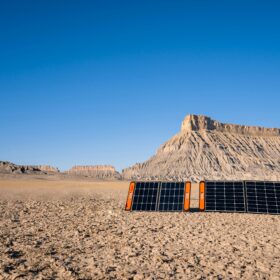
Reducing PV module temperature with air convection
Scientists have analyzed how forced convection PV, free convection with finned plate PV, and forced convection with finned plate PV can reduce solar module temperatures under the climate conditions of Lebanon.
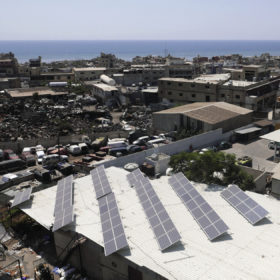
Israeli strikes destroy 150-200 MW of solar in Lebanon
Israel’s recent strikes have reportedly destroyed or damaged 400,000 to 500,000 solar panels, costing Lebanon an estimated 150 MW to 200 MW of installed solar capacity, according to Pierre El Khoury, former director and president of the Lebanese Center for Energy Conservation (LCEC).
Scientists use series active filter to improve power quality of grid-tied PV
Scientists in the Middle East have developed a series active filter to improve power quality in grid-tied PV systems, consisting of an inductor, two capacitors, and four transistor-diode pairs. The filter reduces total harmonic distortion in voltage and current waves at the inverter output.

Lebanese sources confirm just one damaged PV array after reports of blasts
Lebanon’s National News Agency (NNA) has reported that “several” solar arrays have been linked to a second wave of electronic-device explosions across the nation, but local sources have thus far only identified one damaged PV system, which they said was likely affected by external factors.
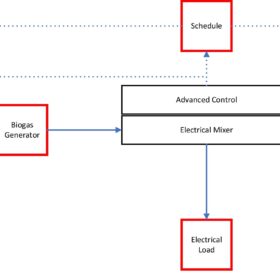
Offgrid hybrid PV-biogas system for residential applications
The system was conceived to respond to Lebanon’s energy crisis and help homeowners become independent from grid electricity. Biogas production is used when PV power generation is insufficient and machine learning techniques help the system predict solar energy production.

Rooftop PV systems explode in several parts of Beirut
A number of solar arrays were reportedly involved in a second wave of electronic-device explosions across Lebanon yesterday, resulting in numerous injuries and deaths. On Tuesday, an initial series of blasts triggered by pagers targeted members of the Hezbollah militant group, but also affected civilians.

Lebanon launches tender for 8 MW solar plant
Lebanon’s Minister of Energy and Water has opened a tender for an 8 MW solar plant that will be publicly funded and connected to the medium-voltage grid to supply power to Electricité du Liban.
Lebanon introduces peer-to-peer renewable energy trading
The Lebanese parliament has ratified a new law that allows peer-to-peer renewable energy trading between private sector entities, in addition to enshrining net metering in the country’s legal system for the first time.
