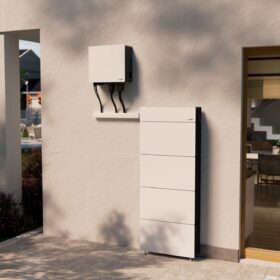
SolarEdge launches Nexis hybrid inverter and high-voltage battery for residential PV
The Nexis solution combines a flexibly configurable hybrid inverter with a modular high-voltage battery offering up to 14 kW charging capacity per stack. The inverter delivers 8–20 kW AC power, supports up to 200% DC oversizing, and features IP65-rated design with integrated backup power.

UAE installs around 1 GW of solar in 2025
Analysis from GlobalData finds the UAE’s cumulative solar capacity increased from 5.7 GW to around 6.7 GW last year. The country’s annual solar deployments are forecast to increase in the coming years, with 20 GW of installed solar expected by the end of the decade.

New framework promises unprecedented level of cybersecurity for SCADA systems
An international research team developed CyberSentry, a software framework using advanced deep learning and optimization techniques to enhance cybersecurity in SCADA systems for power plants and critical infrastructure. It combines feature selection, hybrid anomaly detection, and dynamic parameter tuning to detect diverse cyberattacks with 99.5% accuracy while minimizing false alarms.

Bahrain reveals qualified bidders for 100 MW BAJ Solar IPP project
The Bilaj Al Jazayer Independent Power Project will be developed under a public-private partnership on a build-own-operate basis.

Freight costs increase following military strikes in the Middle East
Freight costs from the Far East to the U.S. and Europe have increased week-on-week, while almost 150 container ships currently unable to leave the Arabian Gulf due to the risk of sailing through an active conflict zone, according to analysis from ocean and freight rate benchmarking platform Xeneta.
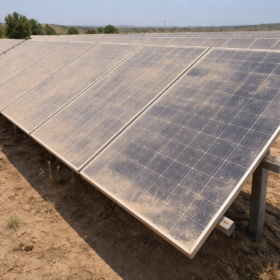
Oleic acid anti‑soiling coating for solar modules
Researchers in Türkiye have developed a passive anti-soiling coating for PV panels using oleic acid–modified aluminum oxide nanoparticles applied via spray coating. Laboratory and field tests showed the coating reduced dust accumulation and initially boosted daily energy output, though performance declined under prolonged environmental stressors.
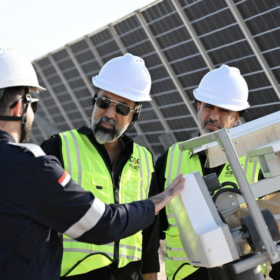
Iraq’s largest solar project enters trial operation
Iraq’s Ministry of Electricity says an initial 61 MW from the first unit of a planned 1 GW solar project has commenced. The project is being developed across four 250 MW units, with final commissioning currently scheduled for 2028.

Iraq slashes solar import tariffs to 5%
The Iraqi Customs Authority has cut customs duties on solar energy systems from 33% to 5% – covering PV panels, inverters, cables, and lithium batteries – to accelerate solar adoption, following financing support from the Central Bank of Iraq.
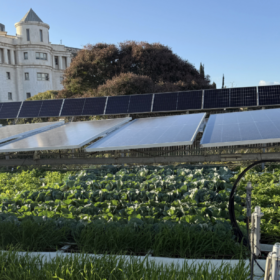
Israel approves rules for agrivoltaics
A zoning masterplan for agrivoltaics in Israel specifies solar panel coverage must not exceed 30% of the cultivated area. The lower edge of panels must be at least 1.5 m above the ground for field crops, increasing to 4.5 meters for orchards and other crops.
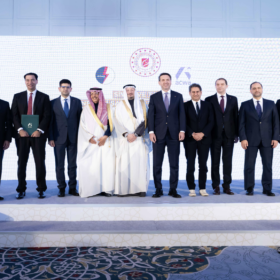
ACWA Power to build 2 GW of solar in Türkiye
Saudi Arabian energy giant ACWA Power will build two 1 GW solar power plants in Türkiye as part of a wider investment agreement covering 5 GW of new renewables capacity in the country.
