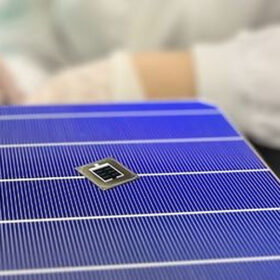
KAUST builds perovskite-perovskite-silicon tandem solar cell with 31.5% efficiency
The Saudi research institute said its new four-terminal tandem device has achieved the highest efficiency ever reported for perovskite-based 4-T and triple-junction tandem solar cells to date. The key feature of the cell is the hole transport layer of the top perovskite cell, which was engineered with self-assembled monolayers.
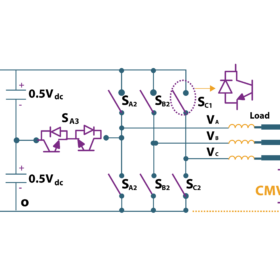
New pulse width modulation tech to reduce switching losses in three-phase inverters
Scientists in the Emirates have conceived a new space vector pulse width modulation method that reportedly reduces switching losses and increase efficiency in three-phase photovoltaic inverters. The proposed technique was found to have a higher efficiency, while providng lower common-mode voltage, leakage current and total harmonic distortion compared to traditional pulse width modulation approaches.

Israeli startup launches agrivoltaic pilot in desert with double-axis sun tracking
Agri-Light has launched its first pilot agrivoltaic project, using a two-axis solar installation on a rail system to move solar panels horizontally above a vineyard in the Negev Desert. The results are due this summer, and the company plans to build commercial projects in Israel and Spain next year.
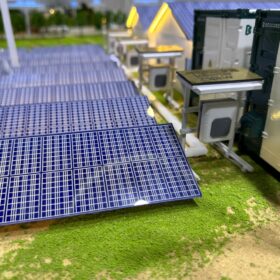
DEWA unveils new method to measure current-voltage curves in PV systems
A group of scientists from the UAE-based energy utility has developed a new method to conduct I-V curve measurements without transporting the solar modules to laboratories for detailed analysis. The proposed Suns-Vmp approach reportedly offers a “very low” average root mean square error between the simulated and the real I-V curves.
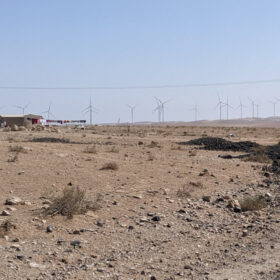
Jordanians eager to embrace renewable energy
According to a new survey, 91% of respondents support the expansion of renewable energy sources in Jordan. Strategic interests of geopolitical actors, in particular the US, are seen as hindering the country’s energy transition, however.

CATL signs 4 GWh supply deal with Israel’s BLEnergy
Chinese battery manufacturer CATL is expanding its presence in the Middle East and Europe via a 4 GWh long-term supply agreement with Israeli integrator BLEnergy.
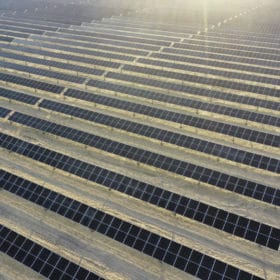
Oman reveals preferred bidders of 500 MW solar tender
The authorities in Oman have revealed the preferred bidders for a 500 MW solar tender for the Ibri III Solar IPP facility.

Solimpeks presents air-to-water heat pump for residential, commercial applications
The Turkish manufacturer said its Varm BCP heat pump has a heating capacity of 3 kW at 20 C outdoor temperature and a coefficient of performance ranging from 3.62 to 4.48.
Unlocking Solar Project Success: Best Practices for Selecting the Right Tracker System
In this pv magazine Webinar, we will explore how advanced tracker technology can improve both the longterm return on investment for solar in the region and help future-proof projects as weather conditions grow more extreme.
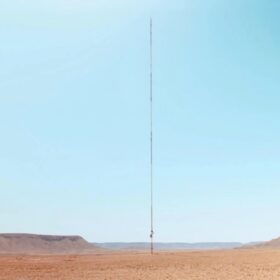
Saudi Arabia launches ‘unprecedented’ geographical survey of renewable energy sites
Part of the National Renewable Energy Program, the ambitious project will identify the best sites to develop renewable energy projects throughout the country. Contracted companies will install 1,200 stations across all regions of the kingdom to measure solar and wind energy. Beginning this year, Saudi Arabia will tender new renewable energy projects with a capacity of 20 GW annually.
