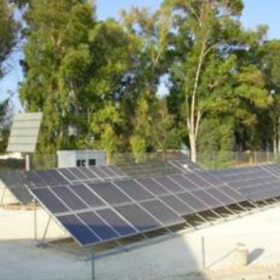
Cyprus starts first nanogrid project
The University of Cyprus and energy developer Ecotricity Holdings have jointly installed a nanogrid system for a single building in Cyprus. The aim is to minimize the site’s energy consumption costs and eliminate the power system’s carbon footprint.
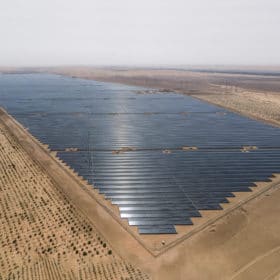
EWEC opens 1.5 GW solar tender in Abu Dhabi
Through the procurement exercise, the Emirates Water and Electricity Co. (EWEC ) is planning to build a giant solar farm in the Khazna area, where several data centers are operated.
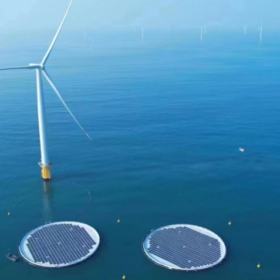
The Hydrogen Stream: Researchers test marine green hydrogen feasibility
Mexican researchers have revealed test results for offshore wind-based hydrogen production, while Turkey has started negotiating hydrogen facility partnerships with the United Arab Emirates.
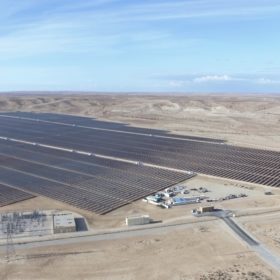
Israel launches tender for 100 MW solar project
Israel has kicked off a tender for a new 100 MW solar project. The array will be constructed in Ashalim alongside four other PV installations and concentrated solar power (CSP) projects. The selected developer is expected to complete construction by 2027.

Dubai’s 250 MW/1,500 MWh pumped-storage project nearing completion
Dubai Electricity and Water Authority’s (DEWA) Hatta pumped-storage hydroelectric power plant is now 74% complete, and it is expected to begin operations in the first half of 2025. The facility will also store electricity from the 5 GW Mohammed bin Rashid Al Maktoum Solar Park.
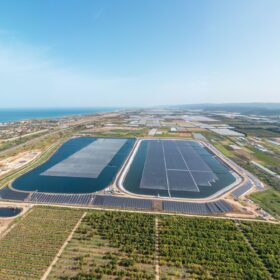
Teralight complete Israel’s largest floating PV project
Teralight has completed Israel’s largest floating PV project, deploying 31 MW of capacity on two water reservoirs in the northern part of the country, at an estimated project cost of $33.8 million.

Israel frees up grid space for 2 GW of renewables
Israel has announced plans to deploy 2 GW of grid-connected renewables. It will allow for additional renewable plants to be built without causing grid congestion, based on specific parameters.
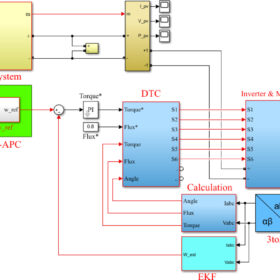
New control strategy for PV-powered water pumps operating under variable atmospheric conditions
Scientists in Turkey have developed a new algorithm to optimize the efficiency of PV-powered water pumps. The novel technique is based on the Extended Kalman–Bucy filter, which is a predictor-corrector algorithm used extensively in control systems engineering for estimating unmeasured states of a process.

New bio-inspired based algorithm to improve PV output under partial shading
The novel algorithm is based on the behavior of marine animal tunicates and reportedly provides remarkable results in terms of power errors. It was tested in four PV system configurations with five different shade patterns.
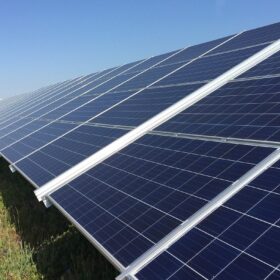
Israel’s Teralight secures 23-year PPA for 108 MW/433 MWh of solar, storage
Teralight has signed a 23-year power purchase agreement (PPA) for 108 MW/433 MWh of solar-plus-storage capacity. It will sell electricity to Dalia Power Energies under a tariff linked to the Israeli Electricity Authority’s regulated production tariffs.
