
Kuwait forecast to reach 2.9 GW of solar by 2030, 10.1 GW by 2035
Kuwait’s solar capacity, which stands at around 50 MW today, is expected to surpass 1 GW in 2029 before increasing rapidly over the first half of the next decade to surpass 10 GW by 2035, according to forecasts made by Rystad Energy.
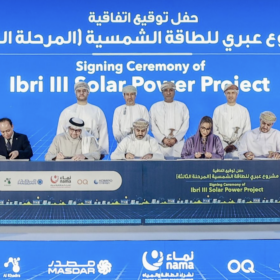
Oman selects developers for 500 MW solar-plus-storage project
A consortium including Abu Dhabi Future Energy Co. (Masdar), Al Khadra Partners, Korea Midland Power Co. and OQ Alternative Energy have been chosen to build a 500 MW solar project in Oman, integrated with a 100 MWh battery energy storage system.
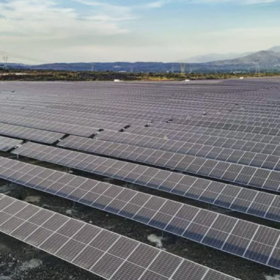
Banks fund $65 million for 100 MW solar project in Turkey
The Asian Infrastructure Investment Bank (AIIB) and Industrial Development Bank of Turkey (TSKB) have each contributed $32.5 million toward a senior debt financing package for a 100 MW solar project in southern Turkey.
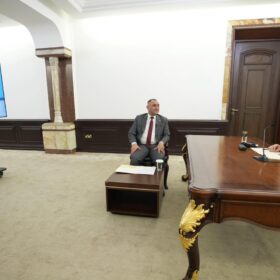
Iraq inaugurates first phase of largest solar plant to date
The first phase of the Karbala solar power plant, totaling 22 MW, is now online. Its capacity is expected to reach 75 MW within the next two moves, ahead of a final 300 MW target.

EBRD to support solar, storage, wind tenders in Jordan
The European Bank for Reconstruction and Development (EBRD) is working with Jordanian authorities to support three renewable energy tenders in the country, including a 200 MW solar project and a 100 MWh storage project.

QatarEnergy selects Samsung C&T for 2 GW solar project
South Korea’s Samsung C&T Engineering & Construction Group is set to build Qatar’s largest solar project to date. The first gigawatt of the 2 GW project is expected to be online by the end of 2028.

Saudi Arabia launches 3.1 GW solar tender
Saudi Power Procurement Co. (SPPC) has announced a request for qualification (RFQ) for 3.1 GW of solar capacity across four projects in the seventh round of Saudi Arabia’s renewable energy tender program.
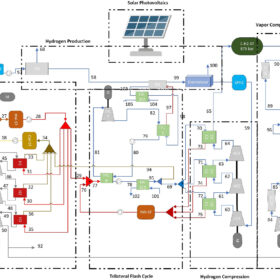
The Hydrogen Stream: Qatari team outlines solar hybrid station design
Qatari researchers tell pv magazine that they have designed the world’s first hybrid station concept combining PV, liquid air, hydrogen storage, and batteries for EV charging and hydrogen refueling.
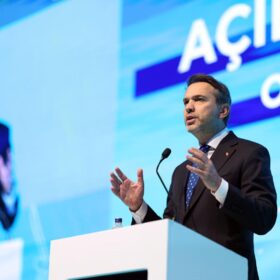
Türkiye to tender 850 MW of solar
Turkiye’s next renewable energy tenders plan to allocate 850 MW of solar alongside 1,150 MW of wind across November and December. A ceiling price of €0.055 ($0.065)/kWh has been set, alongside floor prices of €0.0325/kWh for the solar tenders and €0.0350 for the wind tenders.

KAUST, Franuhofer ISE announce 33.1%-efficient fully texturized perovskite-silicon tandem solar cell
The fully textured tandem cell achieved an open-circuit voltage of 2.01 V and an “extended” outdoor stability in the Red Sea coast, according to the researchers.
