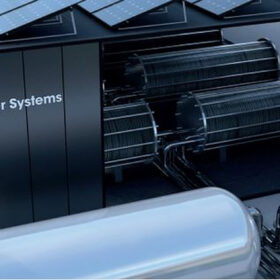
Dutch startup optimizes Edison battery for industrial hydrogen production
Battolyser Systems has improved the efficiency of its Edison battery for industrial hydrogen production. The Dutch startup said the levelized cost of hydrogen (LCOH) could be cut to €1.50 ($1.58) per kilogram by 2025. It has partnered with the European Investment Bank to support its expansion, with ambitious plans to hit 1 GW of production capacity by 2026.
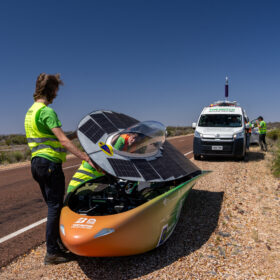
Perovskite-silicon tandem tech from Oxford PV tested in solar race car
A team of Dutch university students under the banner Top Dutch Solar Racing has installed perovskite silicon tandem cells in its entry in the 16th edition of Bridgestone World Solar Challenge. The upcoming race is a six day, 3000 km expedition across the Australian continent, from Darwin to Adelaide.
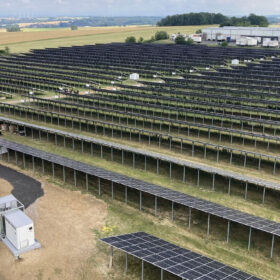
Netherlands allocates $440 million for utility-scale batteries
The government of the Netherlands has allocated €416.6 million ($439.5 million) to fund the construction of utility-scale batteries connected to ground-mounted solar farms or large rooftop PV systems.
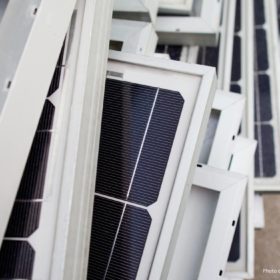
Netherlands raises solar panel recycling fee to ‘absorb shocks’ in market
PV module importers in the Netherlands saw the solar module recycling fee increase from €6.50 ($6.8) per ton to €40 per ton in July. In a chat with pv magazine, Jan-Willem Jehee, operations manager at Stichting Zonne-energie Recycling Nederland (ZRN), explains the money generated from the fee hike will be used to finance a guarantee fund that would ‘absorb shocks in the market should one occur.’

The race for 100% solar
With utility scale solar installations accelerating, Philip Wolfe, founder of PV data consultancy Wiki-Solar, drills into the data to highlight some interesting variations in relative progress around the world.

EV sharing to provide stationary storage services via V2G tech
We Drive Solar and MyWheels have announced plans to transform the Dutch city of Utrecht into the world’s first municipality with a “neighborhood battery on wheels.” The system will feature 25 Ioniq 5 vehicles equipped with vehicle-to-grid (V2G) tech from Hyundai Motor.
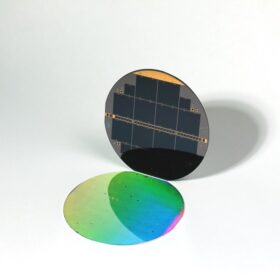
Fraunhofer ISE, AMOLF claim record efficiency of 36.1% for silicon-based multijunction solar cell
The two research institutes said the multijunction solar cell is based on silicon, gallium indium phosphide (GaInP) and gallium arsenide (GaAs). The device utilizes a specially designed metal/polymer nanocoating that reportedly optimizes the distribution of light scattering beyond the total internal reflection critical angle in the cell.
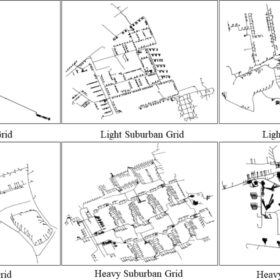
Suburban grids most vulnerable to high levels of EV, heat pump, PV
Researchers from the Netherlands have assessed the potential integration of heat pumps, electric vehicles, and PV systems into distribution grids. They have discovered that suburban grids could face a higher risk of overload. By using actual data from Dutch distribution grid operators, they believe their methodology could be applied to study energy systems in other nations.
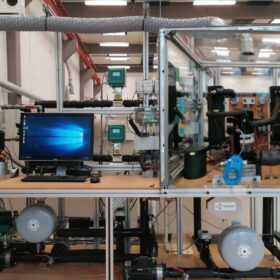
Booster heat pumps to improve efficiency of ultra-low temperature district heating
A research group led by the Technical University of Denmark has analyzed how booster heat pumps may effectively improve the performance of ultra-low temperature district heating networks in colder climates and has found that the refrigerant change plays a crucial role. They also said that powering these heat pumps with renewables may also better integrate clean sources in energy systems.
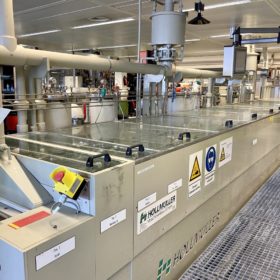
Hyet Solar raises capital for building solar factory in Netherlands
Dutch thin film silicon manufacturer, Hyet Solar, has raised €29 million ($31 million) with Invest-NL contributong €14.5 million of venture debt financing in the round. The company will use the funds to deploy a 40 MW production line at its facility in Arnhem, Netherlands.
