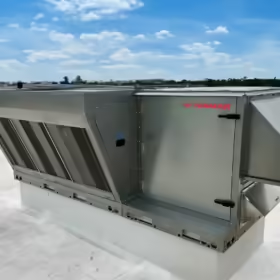
Japanese manufacturer launches dual-fuel commercial rooftop heat pump
Japanese machinery maker Yanmar says its new commercial rooftop units (RTUs) include a standard model, a dual-fuel heat pump, and a dedicated outdoor air system (DOAS) with integrated energy efficiency ratios (IEER) up to 21.3.

New model aims to cut risk in early-stage renewable projects
A new white paper proposes a standardized framework to reduce development risk and improve success rates in early-stage renewable energy projects.

Off-grid solar kits power more than 10,000 clinics across sub-Saharan Africa
We Care Solar has delivered portable solar kits to thousands of clinics, providing reliable lighting and power for maternal care in regions with unstable electricity.
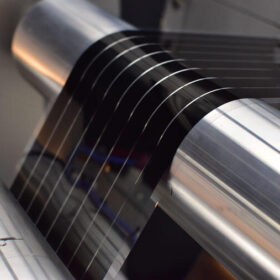
Japanese utility invests in perovskite solar PV startup
J-Power announced an investment in US-based perovskite solar specialist Active Surfaces, along with plans to pilot product tests.

US Army tests Swift Solar perovskite tech in deployable microgrid
US-made perovskite tandem cells from Swift Solar were used in a US Department of Defense hybrid microgrid as part of a recent cybersecurity demonstration.
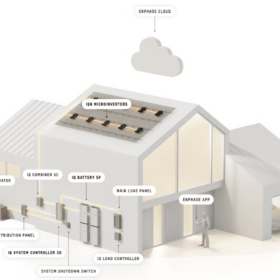
Enphase announces complete off-grid solar-storage system
Enphase Energy has introduced a complete off-grid solar and storage system that integrates batteries, microinverters, and generator control, with international rollout set for 2026.
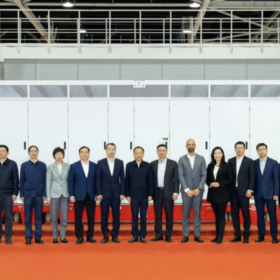
Tesla Energy output rises 84% to 43.5 GWh with record deployments
Tesla Energy reported record storage deployments and profit margins in 2025, with production expansion in the United States and China expected to push output capacity above 130 GWh per year.

AI platform aims to transform solar site assessment
Learnewable uses AI-based insights to detail local solar opposition before developers invest time or energy in projects.

3D solar tower increases capacity factor 50%, triples solar surface area
Janta Power closed $5.5 million in seed funding to develop its vertical solar tower, with pilot programs already underway in major global airports like Dallas-Fort Worth and Munich International Airport.
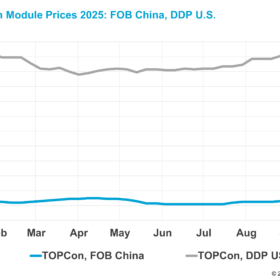
China module prices climb 1.14%, industry awaits polysilicon consolidation plan
In a new weekly update for pv magazine, OPIS, a Dow Jones company, provides a quick look at the main price trends in the global PV industry.
