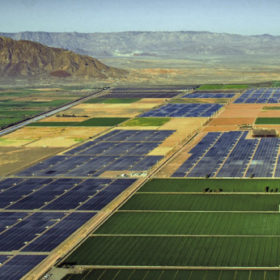
US legislation introduced to build renewable energy ‘superhighway’
Sen. Ed Markey’s Charge Act requires forward-looking transmission planning by utilities to lower prices and improve reliability. Among other sweeping changes, the bill requires hourly operational and greenhouse gas emissions reporting in a timely manner.
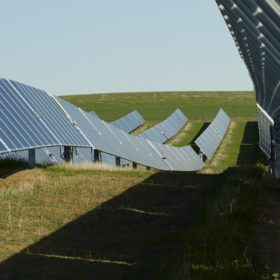
Nextracker unveils new tracker for sloping ground
The NX Horizon-XTR tracker can be used with all types of modules and is claimed to be an ideal solution for sloping, uneven, and demanding terrain.

Photoluminescent solar PV for greenhouses
Heliene, a solar panel manufacturer, and UbiQD entered a joint development agreement for light-optimizing, energy-producing modules designed to top agrivoltaic greenhouses.
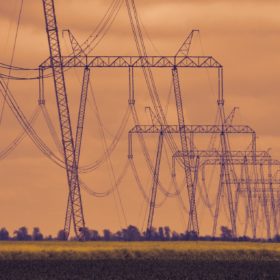
Upgrading US transmission lines could enable 27GW more renewable power per year
“Advanced conductors” can deliver more electricity than conventional transmission lines, using existing transmission towers. Renewables trade group ACORE calls for greater use of advanced conductors, “to accelerate low-cost decarbonization.”

Semi-transparent organic photovoltaic filters for agrivoltaic greenhouses
Researchers in the United States have tested organic photovoltaic filters in a greenhouse hosting lettuce growth and have found the devices’ transmission spectra may help fine-tune the characteristics of the plant. They used transcriptomic analysis to assess the key modifications of the plants grown under the solar filters.
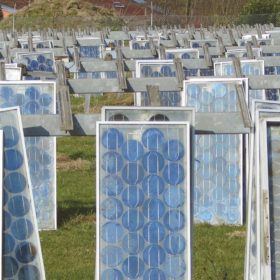
Greening US solar with end-of-life plan
The US Department of Energy’s five-year plan aims to reduce the environmental impacts of solar panels at the end of life, plus cut in half the cost of recycling the panels.
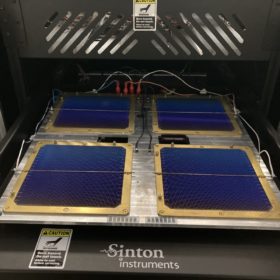
The Solar Tech Check: Toward 50-year modules, and how the numbers add up for HJT
This week sees new technoeconomic analysis published on different aspects/materials for heterojunction: Important to consider as Europe in particular looks to be betting big on this technology for its manufacturing comeback. And a new report from NREL in the United States examines progress in degradation and durability to increase module lifetimes.
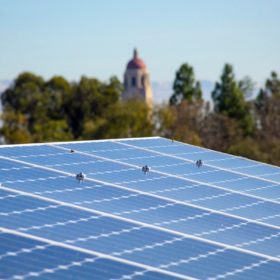
Stanford University now running on 100% renewables
Stanford University is flipping the switch on a 88MW solar array this week, marking a major milestone toward its goal of net zero emissions by 2050.
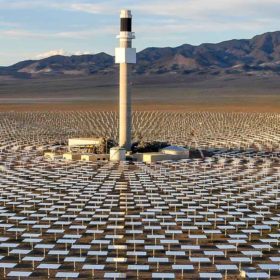
Concentrating solar power with heat storage could compete with batteries
For short-term storage in a 100% renewables grid, thermal energy storage located at concentrating solar power plants could compete with batteries, according to a new study using an idealized grid model. Seasonal storage needs could best be met with power-to-gas-to-power technology.

Goldman Sachs activates 390MW of PV, 561MWh of storage in California
The Slate solar and storage project began development in 2015 and is now one of the largest facilities of its kind in California.
