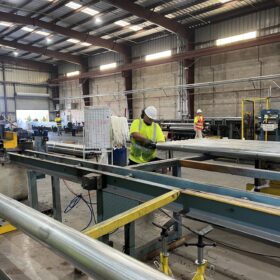
US steel crunch puts solar deployment plans at risk
With US domestic steel mills booked solid through 2025, a sudden doubling of tariffs on imported steel has created a critical bottleneck for American industries. The move, which hits specialized Indian steel particularly hard, is now delaying projects for builders and renewable energy developers who rely on steady, affordable supply.

Xpanner launches robotic automation kit to retrofit solar pile drivers
The U.S. startup offers a new kit to integrate robotic automation with existing equipment.

Tiny pinholes can lead to device failure in perovskite solar cells
Researchers in the United States have found microscopic pinholes in perovskites are responsible for the breakdown of such solar cells when under reverse bias conditions. They say the findings should push scientists and engineers to prioritize the production of pinhole-free films to make perovskites more robust and stable.

US startup launches AI platform for home solar, electrification sales
AI startup 257 offers targeted market intelligence to cut costs in the $20 billion residential solar and electrification market.
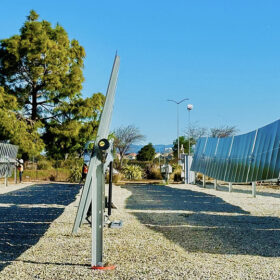
Hail damage to solar projects: 1% of filed claims, but over 50% of total losses
Hail damage has become a real headache for project developers in the United States, where growing deployment has increased exposure to weather-related risk. As project owners seek to limit the impact of hail on their bottom line, innovations in tracking systems and insurance can help.
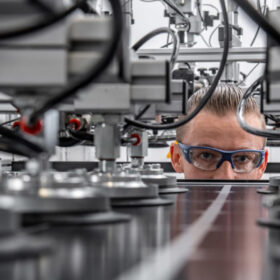
Meyer Burger gives up on selling itself as a whole, sells U.S. solar production tools
Sales of module and cell production equipment to, respectively, Waaree Solar Americas and Babacomari North Solar further thin chances of any Meyer Burger revival of its domestic production.
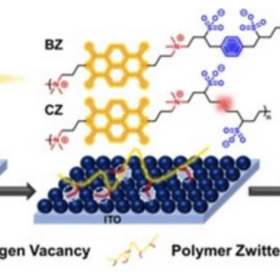
Scientists boost organic solar cell efficiency using polymer zwitterions
A research team based in China and the United States has developed electroactive polymer zwitterions to modify zinc oxide interlayers in organic solar cells. Their work was found to passivate defects in organic solar cells, helping to improve device performance and stability.
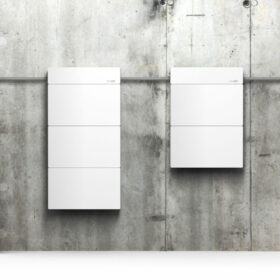
SolarEdge unveils all-in-one residential inverter and clickable modular battery system
The stackable battery ranges 4.9 kWh to 19.6 kWh per unit while the inverter is available in ranges from 3.8 kW to 13 kW. The company also introduced a meter socket adapter to avoid triggering costly main panel upgrades.
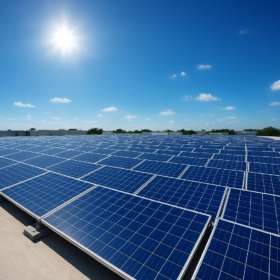
NREL researchers warn of unexpectedly high UV-induced degradation in n-type solar modules
A research team from the U.S. National Renewable Energy Laboratory has analyzed n-type modules deployed in a 3 MW commercial PV project in an effort to assess the high degradation rate reported by the plant owner. The scientists found that ultraviolet-induced degradation (UVID) was a major factor affecting the facility’s performance.
Scaling perovskite tandems’ U.S. prospects
Three US manufacturers actively working to commercialize their respective perovskite-silicon tandem technologies make the case for tandem modules. CubicPV, Caelux and Swift Solar argue a commercial future for perovskites is inevitable, and they tell pv magazine the current policy environment could work in the technology’s favor.
