
Analyst revises up zero-emission vehicle forecast after bumper year
A report published by BloombergNEF for the COP26 climate change summit has listed global commitments by cities, states, provinces and nations to end the sale of new fossil-fueled vehicles but, with 2035 estimated as the cut-off date for zero-emission roads by mid century, policymakers need to be more ambitious.

US Commerce Department throws out anti-dumping petitions
The dismissal is a win for the Solar Energy Industries Association, which vigorously opposed the request by American Solar Manufacturers Against Chinese Circumvention (A-SMACC) for anti-dumping and anti-circumvention (AD-CVD) tariffs
DC Solar owner sentenced to 30 years for Ponzi scheme
DC Solar Co-owner Jeff Carpoff has been sentenced to 30 years in U.S. prison for conspiracy to commit wire fraud and money laundering, in what the Department of Justice has described as “the largest criminal fraud scheme in the history of the Eastern District of California.”

Energy efficiency a good substitute for long-term storage, says NREL
A 60% reduction in building energy use will be key to achieving a low-cost, 100% renewable energy grid, according to a new study by the U.S. National Renewable Energy Laboratory.
SunPower to decide fate of commercial-industrial solar business this year
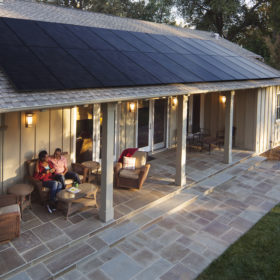
A quarterly update top-loaded with promising business growth in the company’s residential segment revealed commercial and industrial operations supplied an $8 million loss to the three-month figures, with supply chain issues and project timetables blamed.
Shipping problems for First Solar but production line expansion is under way
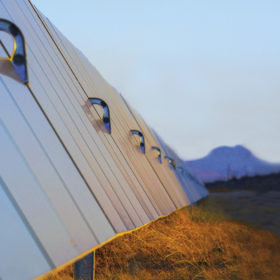
The U.S. manufacturer has started building its third Ohio production base and has also begun ordering equipment to kit out its first factory in India.

USA Roundtables 2021 live blog: Thank you for attending!
Join pv magazine and solar industry leaders as we meet for the USA Roundtables 2021 today, from 10:00 AM to 5:00 PM EST.

Quantum dot solar window with 3.6% efficiency
U.S. manufacturer UbiQD has developed a solar window with laminated glass and luminescent solar concentrators, based on copper indium sulfide and zinc sulfide quantum dots. It is now testing pilot installations in Nevada.

Which crops pair well with solar?
Rapidly falling prices of solar panels have created an impetus for the construction of solar fields, which are often perceived as competing with crop production.
Lithuanian module maker says European and US clients moving away from Chinese supply chain
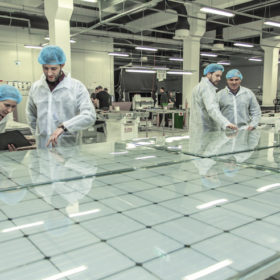
Vilnius-headquartered Solitek is preparing to ramp its output next year on the back of rising orders in Scandinavia, and says its new partnership with New York-based Convalt Energy will reduce its dependence on Asian semiconductors and solar cells.
