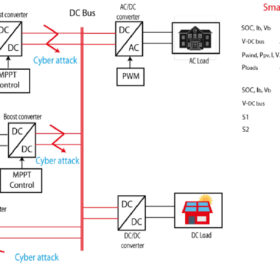
All emerging cyber threats targeting power infrastructure at a glance
Researchers in Moroco analyzed cybersecurity challenges in smart grids, highlighting AI-driven detection and defense strategies against threats like distributed denial-of-service, false data injection replay, and IoT-based attacks. They recommend multi-layered protections, real-time anomaly detection, secure IoT devices, and staff training to enhance resilience and safeguard power system operations.

Morocco finally unlocks solar self‑consumption
Morocco has published the implementing decree for Law 82‑21, enabling self-producers to consume their own solar power and sell up to 20% of surplus energy back to the grid. The measure, effective 9 June 2026, sets clear tariffs and grid limits.

Japan finances 130 MW solar project in Tunisia
The latest round of Japan’s carbon financing program, which provides financial support for low-carbon infrastructure projects in partner countries, is backing a 130 MW solar project being built in southeastern Tunisia.
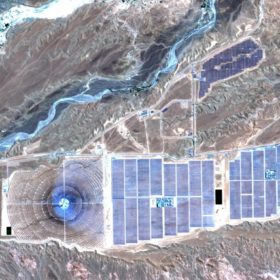
Morocco begins construction on 305 MW Noor Atlas solar program
Morocco’s state energy agency and national utility have signed power purchase agreements (PPAs) and begun construction on six Noor Atlas solar plants totaling 305 MW. The project – financed by KfW, the European Investment Bank and Bank of Africa – aims to expand renewables, support local industry and create regional jobs.

Africa’s next growth frontier: Why agrivoltaics are worth the long-term bet
Africa has abundant sunlight, arable land, and innovative farmers, and agrivoltaics offers a long-term strategy to boost food security, climate resilience, and energy access simultaneously. Success depends on coordinated policy, inclusive community engagement, and patient, innovative finance to build a viable, scalable market.
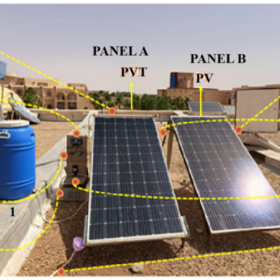
Water-spray cooling can improve PV module efficiency by 28% in arid environments
An Algerian research team has developed a smart water-spray cooling system for PV panels that activates only when temperatures exceed a set threshold, boosting efficiency while minimizing water use in desert conditions. The system raised power output and reduced module temperatures, offering similar efficiency to continuous cooling but with far lower water consumption, pump operation, and costs.

Tunisia issues tender for 300 MW solar plant with 150 MW/540 MWh storage
The country’s first solar-plus-storage project will be located on a 400 hectare surface near Kébili, a town in the south of Tunisia and one of the main cities in the Nefzaoua region.

Morocco installs 204 MW of utility-scale solar in 2025
Official data from Morocco’s National Office of Electricity and Drinking Water puts the country’s cumulative utility-scale solar capacity at almost 1.3 GW, while import data suggests there could be a further 3 GW of operational solar spread across the commercial and industrial, solar pumping and residential solar markets.
Morocco sets net‑metering tariffs for high, medium‑voltage systems
The Moroccan authorities have established new net‑metering tariffs for high, medium, and extra-high voltage systems from March 1, 2026, to February 28, 2027. The low-voltage tariff for residential PV will be set later, as the current regime mainly applies to industrial and commercial solar plants.

Egypt tenders 500 MW solar project
Egyptian Electricity Transmission Co. (EETC) has launched an international tender for a 500 MW solar project in Egypt’s West Nile region. The deadline to submit prequalification documents is May 11.
