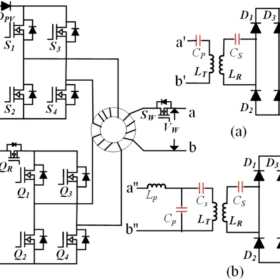
Wireless EV charging based on PV, three-port DC–DC converter
Scientists have developed a wireless charging system for electric vehicles, with a three-port DC–DC converter at its core. They have simulated the system and tested a prototype in their lab and have found it achieved an improved efficiency of 88%.
Norway exempts solar power sharing in industrial zones from grid fees
Norway has introduced fiscal incentives for commercial and industrial (C&I) energy communities, exempting solar power sharing within a single industrial site from electricity taxes and grid fees.
The Hydrogen Stream: Mitsubishi Power completes hydrogen blending project
Georgia Power and Mitsubishi Power have completed a 50% hydrogen fuel blend trial on an advanced-class gas turbine at Plant McDonough-Atkinson in the US state of Georgia, while Proteus Energy and Symbio France have developed a modular 75 kW hydrogen fuel cell system for hybrid and harbor vessels.

EV charging shapes PV investment, grid load in community study
Researchers in Spain have simulated an energy community with varying electric-vehicle penetration levels (0%, 50%, and 100%) to analyze system optimization under different regulatory frameworks and EV brands. Charging strategies significantly affected overall performance and outcomes.
Evert launches wallbox with bidirectional EV charger, PV inverter
Evert has unveiled technical and availability details of its new power management unit, a wallbox that integrates a 22 kW bidirectional DC electric vehicle charger, a 20 kW PV inverter, and a home energy management system. The Norwegian startup targets residential users seeking integrated EV and solar energy solutions.

The Hydrogen Stream: EU backs 15 hydrogen projects
The European Commission has selected projects for €992 million ($1.1 billion) of EU public funding, while the Japanese government has agreed to provide $4.80 in subsidies for hydrogen fuel cell trucks.

The Hydrogen Stream: Axpo reports progress on automated H2 project
Axpo has started remotely controlling a 2.5 MW hydrogen production facility (HPF) in Switzerland, while Statkraft says it will halt new green hydrogen projects amid market uncertainty.

The Hydrogen Stream: Scandinavia, Italy may produce grid hydrogen by 2030
Aurora Energy Research says the global electrolyzer pipeline now totals around 1.3 TW, with 114 GW in development and 32% expected online by the end of 2026. The firm cites stronger EU policy support and growing momentum in hybrid power purchase agreements (PPAs).

Glint Solar unveils software for early-stage BESS projects
The Norwegian PV planning software company has released a new product for prospecting, analysis, and design of battery energy storage system (BESS) projects at the early stage.
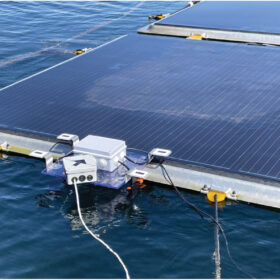
New model to measure wave-induced loss in floating PV
Researchers have developed a three-step technique to estimate power generation loss in floating PV farms resulting from changes in tilt and mismatch losses. The new module was tested in an experimental setup and showed that electricity losses mainly depend both on system design and location.
