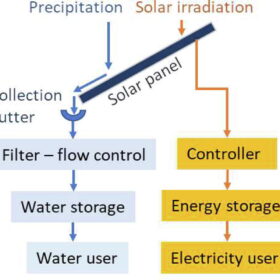
How to combine photovoltaics with rainwater harvesting
Scientists have developed a system that harvests rainwater running off PV panels for household use or hydrogen production. Their analysis showed that, in the southern Sahel, the system can meet both the energy and water requirements for electrolysis, with surplus rainwater covering up to 50% of a household’s daily water demand.

Offshore vs. ground-mounted PV
Researchers in Saudi Arabia have compared the performance of ground-mounted PV plants with that of off-shore solar facilities and have found that floating installations benefit from the cooling effect of the seawater.

The Hydrogen Stream: Chile selects electrolyzer companies for local assembly
Chile’s economic development agency Corfo has selected three companies – two Chinese and one Spanish – to build electrolyzer production facilities in the country. The projects, set to begin operations by mid-2026, will assemble alkaline and proton exchange membrane (PEM) electrolyzers ranging from 50 kW to 5 MW.
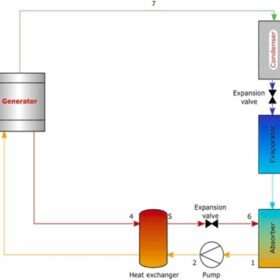
PV-driven absorption cooling system for arid regions
Scientists in Saudi Arabia have simulated a solar-powered single-effect absorption cooling system that uses water-lithium bromide as a working fluid, under the environmental conditions of Riyadh. Exergy and exergy rates are calculated for each level of the system, with optimal generator performance being found to peak at 80 C.
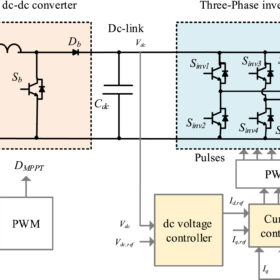
Dual-component controller for three-phase solar inverters can reduce overshoot to less than 0.33%
An international research team has conceived a dual-component controller for three-phase inverters that can reportedly achieve faster settling times, reduced overshoot and more stable current tracking compared to conventional controllers.
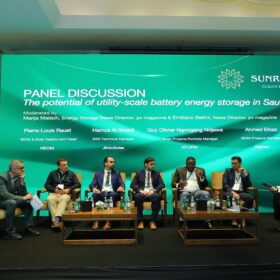
Key takeaways from Sunrise Arabia 2025
A recent joint event by Solarabic and pv magazine in Riyadh highlighted Saudi Arabia’s rapid push for clean energy and localization, with new factories and large storage projects taking shape.
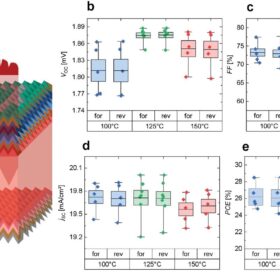
Perovskite-silicon tandem solar cell based on hole selective monolayers achieves 29.8% efficiency
Researchers from Fraunhofer ISE and KAUST built a perovskite-silicon tandem solar cell that reportedly offers improved reproducibility. The device relies on self-assembled monolayers that result in low parasitic absorption and rapid charge extraction.

ACWA Power building hydrogen bridge between Europe and Middle East, North Africa
In an exclusive interview with pv magazine, ACWA Power CEO Marco Arcelli said the Saudi energy giant is currently exploring opportunities to build a hydrogen corridor between Europe and the Middle East and North Africa. He spoke about the company’s current 2 GW hydrogen project in Neom and presented the company’s plans for renewable energy and desalination.

TrinaTracker establishes 3 GW factory in Saudi Arabia
The facility will manufacture TrinaTracker’s Vanguard series of solar trackers and smart control systems. Commercial operation is set to begin during the first quarter of this year.
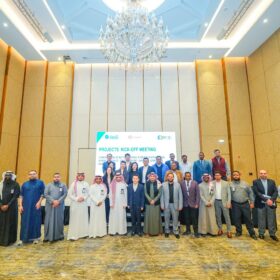
BYD to supply 12.5 GWh of battery storage in Saudi Arabia
Following a report in January, BYD has now officially secured the 12.5 GWh battery energy storage system (BESS) supply deal.
