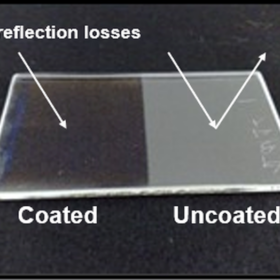
Porous silica-based anti-reflective coating increases PV glass optical transmission by 5.2%
Researchers in Spain developed a porous silica anti-reflective coating for solar panels that boosts optical transmission while balancing durability and mechanical stability through optimized sol–gel chemistry.
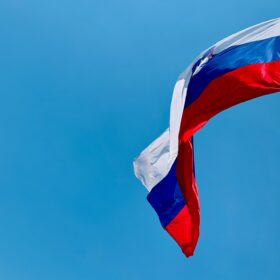
European prosecutor investigates suspected solar tender fraud in Slovenia
The European Public Prosecutor’s Office is investigating an unnamed solar company after it breached conditions of a public tender for the co-financing of small solar plants. The office says house searches were carried out this week by Slovenian police, leading to the seizure of documents, electronic data and devices.
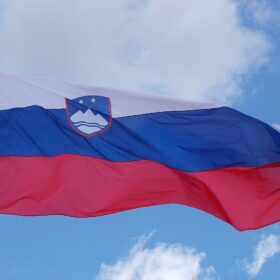
Slovenia adds 146.5 MW of solar in 2025
Slovenia installed less solar in 2025 than in 2024, largely down to a sharp drop in residential installations. The country’s cumulative solar capacity now stands at 1.57 GW.

The prospects for ultra-high-temperature heat pumps
An international research team has reviewed emerging solid-state and gas-cycle heat pumps capable of reaching temperatures of up to 1,600 K, assessing their challenges, applications, scalability, and technology readiness levels. The researchers say these systems could outperform conventional high-temperature heating technologies by achieving coefficients of performance above 1.
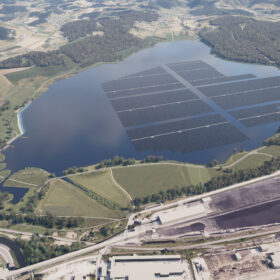
Slovenia plans 140 MW floating solar plant
Slovenian energy company HSE is developing a 140 MW floating solar project, with work currently underway on spatial planning activities. The solar plant is set to become Slovenia’s largest solar project and Europe’s largest floating solar array to date.
Slovenia deploys 85 MW of solar in H1
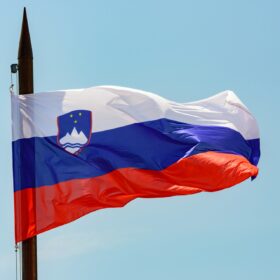
Slovenia installed 85 MW of solar in the first half of 2025, driven by growth in commercial and industrial (C&I) projects and utility-scale installations. The lowest total in four years reflects a sharp decline in residential installations, despite continued subsidies for residential hybrid systems.
Slovenia opens €29 million call to fund priority solar, wind projects
Slovenia has opened a €29 million ($33.7 million) call under the European Union’s Modernisation Fund to support priority solar and wind projects, with applications due by Jan. 7, 2026.
Precise backside irradiance modeling for bifacial PV is often unnecessary
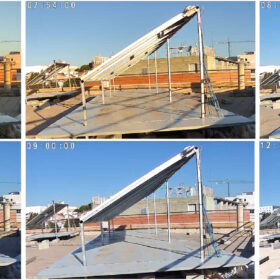
A European research group has developed a new “empirical” method for measuring the backside irradiance of bifacial PV system. The proposed approach was tested across several European locations and it was found to enable annual performance calculations with a fixed backside irradiance share value.

Slovenian government approves largest solar project to date
Slovenia has approved its largest solar project to date, with energy company Dravska Elektrarna Maribor set to develop the 30 MW Zlatoličje-Formin plant in the country’s northeast.

Low residential solar feed-in tariffs can encourage battery deployment
Analysis of feed-in tariff scenarios in Central and Eastern Europe finds that while high feed-in tariffs are linked to the adoption of residential solar, lower tariffs are more likely to encourage battery installations. The study proposes a moderately low range of tariffs as one compromise to support both technologies.
