
Impact of overcapacity on solar stocks
BloombergNEF Senior Analyst Jenny Chase and Aurora Energy Research Renewables Lead Rebecca McManus speak with pv magazine about financial market trends for solar companies and the role of overcapacity as a driver of turbulence in the industry.
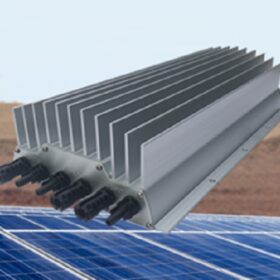
Ampt introduces 70 kW output solar string optimizer
The i50 optimizer supports the largest utility-scale solar projects.
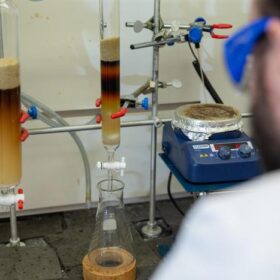
High-energy, membrane-free organic redox flow battery
US researchers have developed a new high-voltage, membrane-free, nonaqueous lithium-based organic redox flow battery. They say that the elimination of the membrane decreases the upfront costs of the battery by as much as 30%.
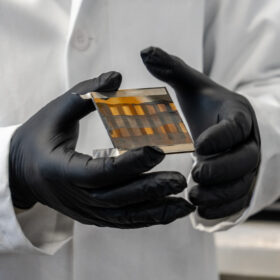
Accelerated testing procedures for perovskite solar cells
Scientists in the US developed a series of accelerated testing procedures designed to predict how perovskite solar cells will perform when installed outdoors for a long period of time. The study finds that combined, simultaneous exposure to light and heat gives the most accurate of how a perovskite solar cell will perform in the field.
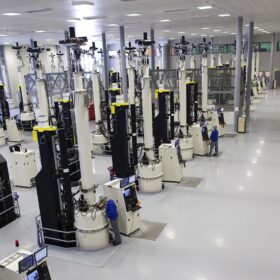
Silfab Solar signs deal with NorSun for US-made wafers
NorSun recently raised $8.5 million of new equity to further develop clean energy manufacturing projects in the United States, including a 5 GW ingot and wafer factory.
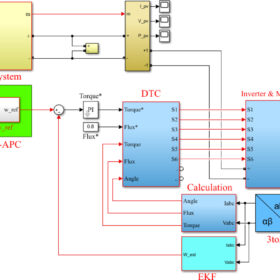
New control strategy for PV-powered water pumps operating under variable atmospheric conditions
Scientists in Turkey have developed a new algorithm to optimize the efficiency of PV-powered water pumps. The novel technique is based on the Extended Kalman–Bucy filter, which is a predictor-corrector algorithm used extensively in control systems engineering for estimating unmeasured states of a process.
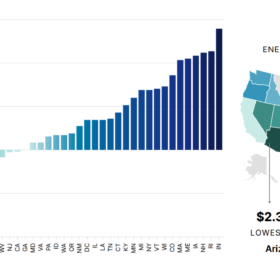
Residential solar average payback period is 8.3 years in U.S., said EnergySage
Pricing is beginning to cool slightly, but financing terms have changed from 2.99% to 4.99% for a 25-year loan.
The Hydrogen Stream: combination of power grid expansion and hydrogen network cheapest option in a net-zero system
Researchers found out that the cheapest way to reach a net-zero system in Europe includes a power grid expansion and a hydrogen network. Meanwhile, Lhyfe signs a PPA for its hydrogen facility in Bretagne, and Nortegas reaches 15% of hydrogen in replica of its distribution network in Spain.
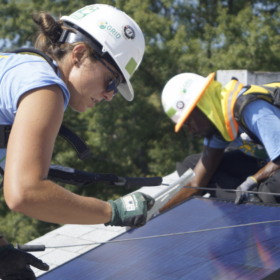
Solar dominated US generation capacity additions in H1, says Wood Mackenzie
Wood Mackenzie notes in a new report that solar accounted for 45% of US electricity generation capacity additions in the first half of 2023. It says that it expects 15% annual growth in PV installations through 2028.
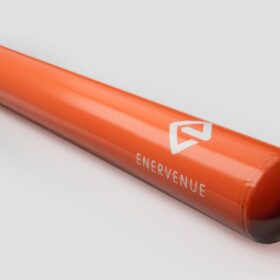
EnerVenue launches new metal-hydrogen battery variant
EnerVenue has developed a new metal-hydrogen battery. The US startup says the battery’s efficiency ranges from 80% to 90%, depending on the cycle rate, and claims that its energy density per square foot is equal to or even better than lithium-ion batteries.
