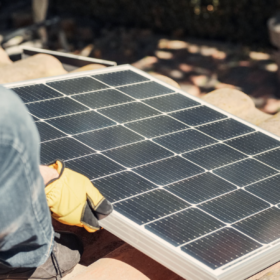
Prepaid rooftop solar model targets 40% US federal tax credits
US companies SolSource Solutions and TriBeam Financial have launched a prepaid residential solar and storage financing product designed to unlock federal tax credits of up to 40%.

AI platform aims to transform solar site assessment
Learnewable uses AI-based insights to detail local solar opposition before developers invest time or energy in projects.
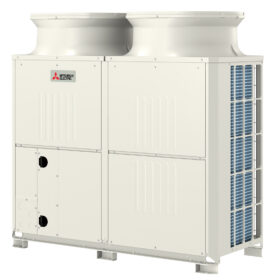
Mitsubishi Electric Trane announces new heat pump line for hydronic heating
The systems deliver outlet water temperatures up to 74 C, operate in ambient temperatures from -25 C to 43 C, and can be cascaded in groups of up to 16 units for larger commercial applications.
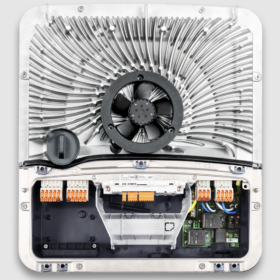
Fronius expands residential solar backup power with PV Point Comfort
Austria-based inverter manufacturer Fronius has launched PV Point Comfort, a retrofit-ready hardware upgrade that provides automatic backup power for essential household loads without requiring battery storage.
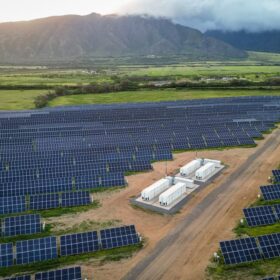
BlackRock investor led consortium buying AES in $10.7 billion cash deal
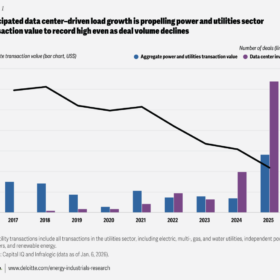
The transaction is the latest big announcement in a hot market for US power and utilities mergers and acquisitions, as companies jostle for position in anticipation of AI-driven demand spike.
US solar-plus-storage M&A heats up as AI data centers drive demand
As AI-driven data center demand tightens grid capacity across the United States, investors are shifting toward de-risked, late-stage solar-plus-storage portfolios to secure firm capacity in a higher interest rate environment, according to Deloitte.
US energy storage shatters records with 58 GWh installed in 2025
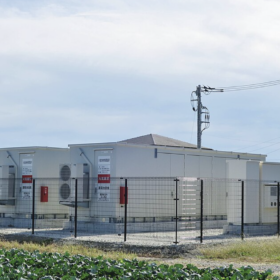
The Solar Energy Industries Association (SEIA) and Benchmark Mineral Intelligence say US battery installations reached a record 57.6 GWh in 2025, up 30% year on year, as the industry enters what they describe as a new phase of sustained, high-volume deployment.
Expiring US tax credit drives record solar demand in H2 2025
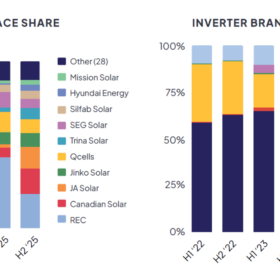
EnergySage says the looming expiration of the federal residential solar tax credit drove a 205% surge in homeowner engagement in the second half of 2025, with median pricing of $2.49/W, an average system size of 11.8 kW, and a decline in storage attachment rates as customers rushed to install systems before the end of the year.
The Hydrogen Stream: ACES 220 MW Utah project nears completion
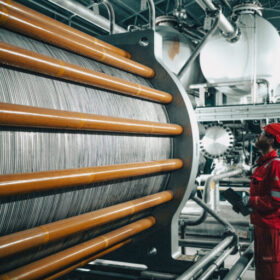
HydrogenPro says its 220 MW ACES Delta project in Utah is nearing completion, with all electrolyzers operating at full load, while the hub will store hydrogen in salt caverns with energy capacity two to three times that of all US grid-connected batteries combined.
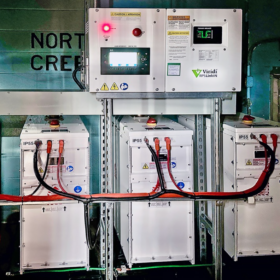
Batteries replace diesel backup at wastewater plant in New York
Viridi batteries have been deployed in New York to replace diesel generators, accelerating a trend where batteries replace and complement generators of all sizes.
