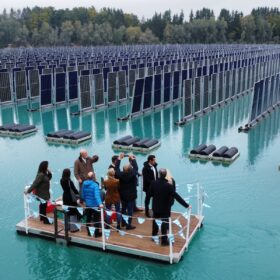
Vertical floating PV plant comes online in Germany
Sinn Power has deployed a 1.8 MW vertical solar array on a quarry lake in the Bavarian municipality of Gilching. The company highlights the ecological benefits of the vertical system configuration and, perhaps surprisingly, its high resistance to storms.
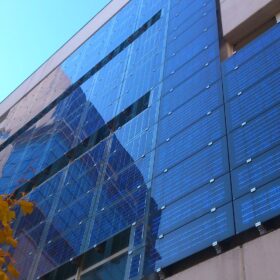
Battery storage boosts viability of south-facing solar facades
Researchers in Germany have examined how battery storage could help façade PV systems move beyond their niche market by 2030. Their findings show that a large majority of south-oriented façades in Europe could be equipped with vertical solar arrays combined with batteries.

The Hydrogen Stream: Australia opens second Hydrogen Headstart round
The Australian government has aunched the second round of its Hydrogen Headstart program to provide revenue support for large-scale renewable hydrogen projects, while the UK government is seeking industry input on rules for hydrogen-to-power participation in its capacity market.
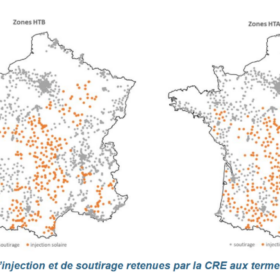
France revises grid tariffs to spur smarter battery storage use
France’s updated TURPE 7 framework adds an annual injection-withdrawal charge to incentivize battery energy storage system (BESS) operators to balance grid loads during high demand or surplus generation periods.
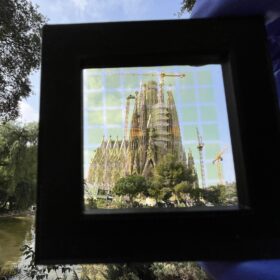
Transparent amorphous-silicon solar cell lets in more than 60% of visible light
Scientists in Spain have developed an amorphous-silicon solar cell that could be used in both transparent photovoltaics and tandem applications. The device reportedly achieves notable efficiency levels and may offer an alternative to transparent organic photovoltaics.
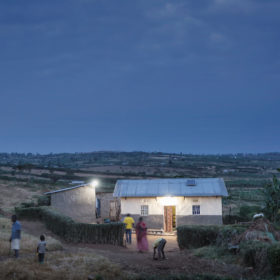
Engie sells Africa off-grid business to Ignite
UAE-based Ignite has bought Engie Energy Access, creating Africa’s largest off-grid solar and minigrid operator, serving 15 million people.
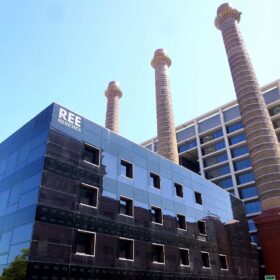
Spain’s grid operator warns of sudden voltage variations in the network
Red Eléctrica de España (REE) says sudden voltage variations in Spain’s grid are tied to renewable generation shifts, but there is no risk of blackout.

Ireland allocates over €1 billion to renewables, solar takes lead
For its 2026 budget, the Irish government will allocate a record €558 million ($648.1 million) for home and community energy upgrade grants, including the popular microgeneration scheme for residential PV, and extend the €400 income tax exemption for microgeneration profits until 2028 to help lower energy bills.
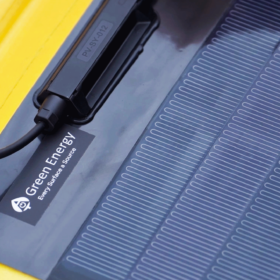
Vehicle-integrated photovoltaics for biofuel-powered transport trucks
DHL Freight Sweden and Denmark-based Green Energy Group announced a one year nationwide pilot in Sweden to test the use of vehicle integrated PV with a fleet of biofuel-powered transport trucks.

Standardized testing for indoor PV
Researchers at Simon Fraser University in Canada have proposed protocols for standardized testing to avoid skewed results. The validated recommendations cover procedures for key measurements and the use of the indoor PV reference cell method.
