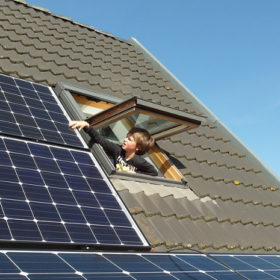
Residential based energy storage will become the new ‘Boiler 2.0
Residential-based energy storage will become the new ‘Boiler 2.0’ and could form part of a virtual power plant, providing a viable solution to the global energy crisis and helping us to achieve our net-zero goals.
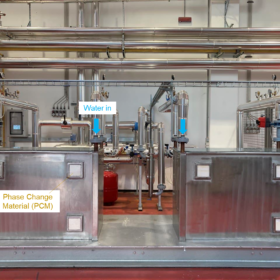
Latent heat thermal storage with PV for nearly zero-energy buildings
Researchers in Italy are combining PV with latent heat thermal storage (LHTM) and other renewable energy sources to maximize clean energy consumption in buildings. The 47kW PV array and LHTM system work independently, but the scientists said that a heat pump could be used to link them.

National Energy Transition Fund may help Spain become Europe’s largest renewable energy producer
A White Paper written by Áurea Capital Partners analyzes the integration of the European energy market to conclude that Spain is “facing a leadership opportunity and a unique geopolitical advantage that must be taken advantage of and accelerated.” The creation of a National Energy Transition Fund, like that created by Norway for its oil industry, may help the country attract huge investment for clean energy.

Chint to supply modules for 329MW of Danish solar
The Chinese solar module manufacturer and its German EPC partner Intec have landed a contract to develop BeGreen’s Danish solar portfolio.

Alpiq plans 18MW vertical bifacial PV plant in the Swiss Alps
The Gondosolar project will be built at an altitude of over 2,000m and is expected to produce around 23.3 million kWh of electricity per year.

Small-area, colored perovskite BIPV module with 13.9% efficiency
Through a conventional coloring technique for crystalline solar modules, scientists in Germany were able to manufacture a colorized small perovskite solar module in white marble optic displays that maintains up to 88.5% of the efficiency it had before coloring. The device was built with five cells interconnected in series and has a total area of 9cm2.
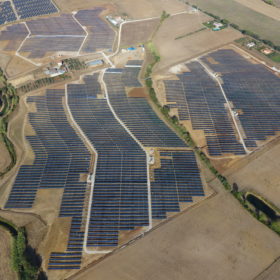
Solar investors back Italy despite electricity price cap
With the Italian government temporarily limiting the returns available from solar plants on the wholesale energy market, Swiss investor SUSI Partners says the underlying strength of the country’s PV industry remains.
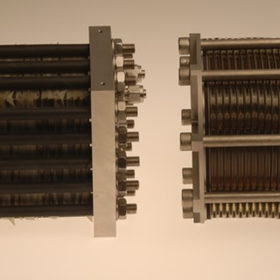
Large scale alkaline electrolyzers may be built at €444/kW in 2030
Researchers at Germany’s Fraunhofer ISE have estimated the costs for both alkaline (AEL) and proton exchange membrane (PEM) electrolyzers and have found that AEL systems have bigger margins for cost reduction. According to their calculations, the costs of a large scale AEL electrolyzer with a capacity of 100MW should drop from €663/kW in 2020 to €444 in 2030.
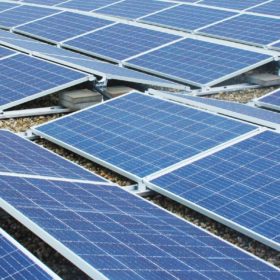
France concludes C&I rooftop PV tender with average price of €0.08312/kWh
The French authorities have allocated 157MW of solar power in the country’s latest procurement exercise, with an average final price of €0.08312/kWh.

SolarPower Europe calls on Italy to abandon measure introduced to halt rocketing energy price
Mario Draghi’s administration has replaced market-driven electricity prices for the rest of the year and replaced them with tariffs based on historical averages. With solar plant operators among those affected, the European trade body for PV is not amused.
