
Fimer, Enie to set up inverter factory in Algeria
The Italian inverter maker and the Algerian electronics manufacturer are joining forces to produce solar inverters in Algeria. The location of the planned manufacturing facility was not disclosed.

Irish utility plans to have 58 MW of solar generating next year
French clean power company Neoen, part of the Paris-headquartered Impala conglomerate, is constructing three Irish solar plants with a total generation capacity of 58 MWp and has secured an agreement from Bord Gáis Energy to buy the electricity they will generate.
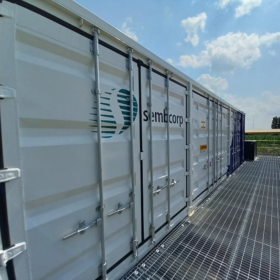
Sembcorp builds 360 MW battery in the UK
Once deployed, the battery will be Europe’s largest storage facility.
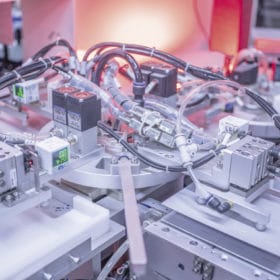
German PV equipment providers keep recovering, but uncertainties remain
German engineering association the VDMA has reported increasing orders and sales for PV equipment suppliers in the third quarter. China accounted for around 80% of PV production equipment demand during the period.
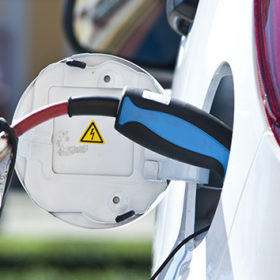
Plans for EV battery raw material supply in Iberia
The partners behind a JV aiming to develop a lithium conversion factory in Portugal say Iberia could supply enough geological feedstock spodumene to produce 700,000 EV batteries per year, starting in 2026.
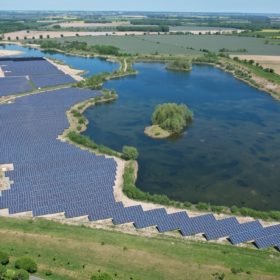
Developers sign PPAs for solar parks in Germany
RWE has signed a power purchase agreement with Enerparc for a 57 MW solar project, while a unit of Airbus has signed a deal with GP Joule for a 3.5 MW array.
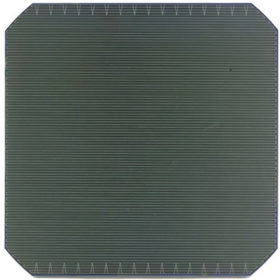
Large-area bifacial TOPCon solar cell with 23.01% efficiency
The n-type cell was built with phosphorus-doped LPCVD poly-Si passivating contacts and achieved a remarkable open-circuit voltage of 691.7 mV. According to its creators, with some adjustments the cell may be suitable for commercial production.
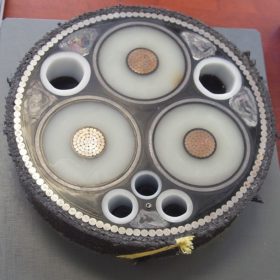
New subsea cables for the UK
Another round of the so-called “cap and floor” regime is expected to be held next year and will help the U.K. reach a total electricity interconnection capacity of 16 GW by 2030. The new interconnectors will likely be intended to harness large amounts of power from big offshore wind farm clusters in the North Sea.
Comment le photovoltaïque peut réduire les coûts d’infrastructure de recharge des véhicules électriques des bâtiments tertiaires
Que ce soit pour des raisons environnementales ou sous l’impulsion d’incitations fiscales et réglementaires, le nombre de propriétaires de véhicules électriques est en augmentation. L’énergie solaire photovoltaïque a également un réel avenir, la production en autoconsommation permettant de minimiser la facture énergétique et les OPEX consacrées à la recharge, tout en réduisant l’empreinte carbone du bâtiment.
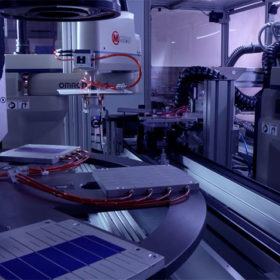
Mondragon Assembly unveils tabber stringer for heterojunction PV cells
Mondragon Assembly has developed a new solution for the interconnection of heterojunction cells with electrically conductive adhesive tech. It can now produce up to 2,600 cells per hour, and is already available on the market.
