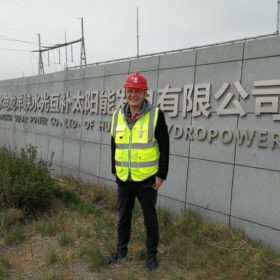
Solar is essential to build the France of 2030
KilowattSol CEO Xavier Daval has criticized the absence of references to solar in the French government’s post-Covid recovery plan, which has allocated €30 billion to the energy transition. The head of the PV technical advisory says solar must become more central to France’s strategic choices and China must not be allowed to retain its near-monopoly on PV panel manufacturing.
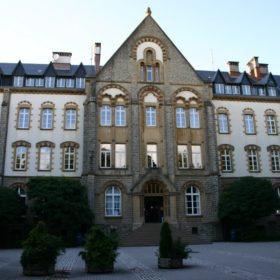
CIGS cells for micro-concentrator PV devices
Scientists have developed a new micro CIGS cell by using an area-selective electro-deposition process as a material-saving technique. It has a conversion efficiency rate of 5.2% and a high open-circuit voltage.
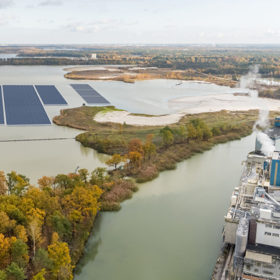
Belgium’s first floating PV project comes online
The plant was installed by developer Floating PV NV on five hectares of a lake created by sand extraction and owned by sand and minerals company Sibelco in Dessel, Antwerp province.
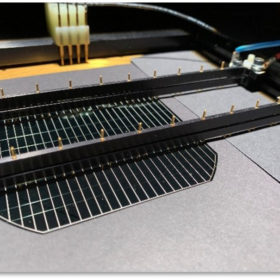
Modular systems to produce perovskite-silicon cells on six-inch wafers
Researchers in Germany are scaling up efforts to bring perovskite-silicon tandem solar cell technology into industrial scale production. The scientists say manufacturing cells of that kind is possible on widely-available six-inch silicon wafers and modular systems are being designed to do so at scale.
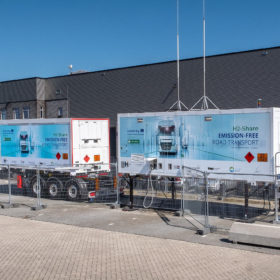
Hydrogen to go
German company Wystrach has developed a 350-bar hydrogen refueling station for heavy duty vehicles which can be installed anywhere.
Will a watered down EU Just Transition Fund still be effective?
The EU Council has rejected a Covid-inspired European Commission proposal for a €40 billion warchest to help coal-dependent regions shift to renewables, with the heads of member states instead allocating €17.5 billion. Despite the final figure being €10 billion higher than that suggested by the commission before coronavirus battered Europe, questions have been asked about how useful the program will be.
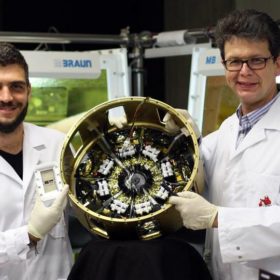
Perovskites in space
Scientists led by the Technical University of Munich have packed a variety of perovskite and organic solar cells onto a rocket, and sent it into orbit 240 kilometers above the planet’s surface. Their results demonstrate strong potential for such technologies to power satellites and even deep space missions.
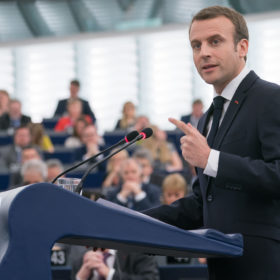
France devotes €30 billion to energy transition
The French government will use around €9 billion of its new €30 billion global investment package to support the development of a hydrogen economy, as part of the country’s Covid-19 recovery plan.
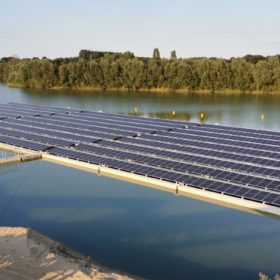
Floating PV powering sieving machines, suction excavators at German quarry
Rheinland Solar has built a 750 kW floating solar plant to power several sieving machines and suction excavators at a quarry in Germany. On weekends, the excess electricity is sold to the grid at market prices.
IB Vogt secures $135 million from EIG Global Energy Partners
The German developer will use the funds to finance its 16 GW global solar pipeline.
