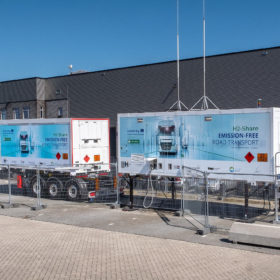
Hydrogen to go
German company Wystrach has developed a 350-bar hydrogen refueling station for heavy duty vehicles which can be installed anywhere.
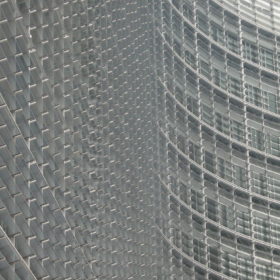
Will a watered down EU Just Transition Fund still be effective?
The EU Council has rejected a Covid-inspired European Commission proposal for a €40 billion warchest to help coal-dependent regions shift to renewables, with the heads of member states instead allocating €17.5 billion. Despite the final figure being €10 billion higher than that suggested by the commission before coronavirus battered Europe, questions have been asked about how useful the program will be.
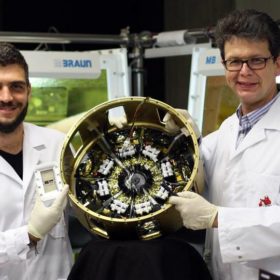
Perovskites in space
Scientists led by the Technical University of Munich have packed a variety of perovskite and organic solar cells onto a rocket, and sent it into orbit 240 kilometers above the planet’s surface. Their results demonstrate strong potential for such technologies to power satellites and even deep space missions.

France devotes €30 billion to energy transition
The French government will use around €9 billion of its new €30 billion global investment package to support the development of a hydrogen economy, as part of the country’s Covid-19 recovery plan.
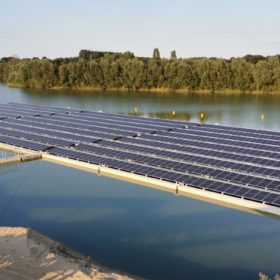
Floating PV powering sieving machines, suction excavators at German quarry
Rheinland Solar has built a 750 kW floating solar plant to power several sieving machines and suction excavators at a quarry in Germany. On weekends, the excess electricity is sold to the grid at market prices.
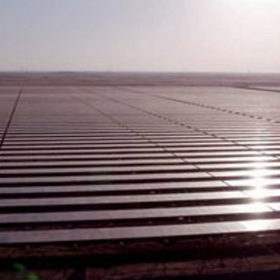
IB Vogt secures $135 million from EIG Global Energy Partners
The German developer will use the funds to finance its 16 GW global solar pipeline.
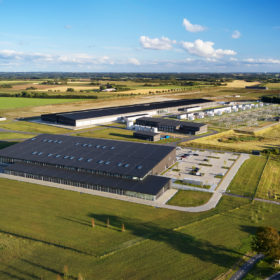
Apple data center in Denmark powered by 50 MW of solar
European Energy has built a solar array and is now constructing a wind farm to provide Apple’s data center in Denmark with 100% renewable energy. The PV project, which features bifacial panels, is the country’s largest unsubsidized PV installation in operation.
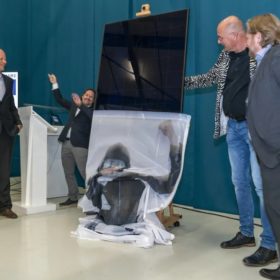
Zebra IBC cell with 24% efficiency moves to large-scale production
Netherlands based manufacturer Energyra this week introduced a new back contact module, which it has developed in partnership with Dutch research institute TNO and Germany’s ISC Konstanz. A prototype module was unveiled yesterday in a small presentation at Energyra’s factory in Zaandam, Netherlands. The company is targeting large-scale manufacturing by the end of 2020.

Machine-learning for PV module cleaning
French researchers have developed a machine-learning model to clean low-power PV projects and standalone solar arrays in rural areas isolated from the grid.

Analysis: Initial results of Portugal’s solar+storage auction
Portugal’s recent PV auction marks a new era of battery storage for the country, says UK consultancy Everoze. It notes that the auction was so competitive that the winners had to cut their expected remuneration in the solar+storage category to negative values. It claims that the real winner is the government, as it is maximizing the value of scarce grid capacity, and argues that the auction could become a benchmark for nations with limited grid space.
