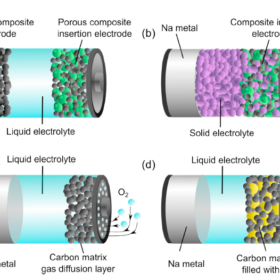
An optimistic – but realistic – perspective for sodium batteries
International researchers have analyzed the potential of sodium-based energy storage and found recent technical advances have arrived faster than those for the lithium-ion batteries which have been studied for three decades. Issues remain, however, before sodium constitutes a complementary option to lithium.

Portuguese green hydrogen for the Port of Rotterdam
The Portuguese and Dutch governments want to connect the hydrogen project of Sines to the Port of Rotterdam and to develop a strategic export-import value chain to ensure the production and transport of green hydrogen to the Netherlands and its hinterland.
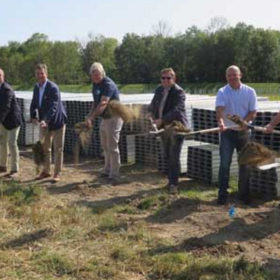
Subsidy-free, utility scale German solar farms could sell power on spot market
The unsubsidized market is taking another step forward in Germany with the news of two projects ready to sell power to the wholesale market as well as through PPAs.

Iberdrola sets up green hydrogen unit
The Spanish energy company, which has hydrogen projects under way in its homeland and the United Kingdom, says it will allocate new resources to position itself at the forefront of the supply of renewables-powered hydrogen.
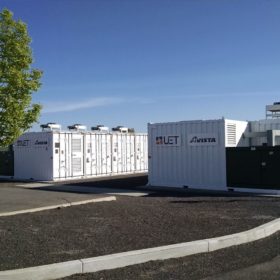
Best membrane for vanadium redox flow batteries
A new research paper looks at the membranes used for applications in vanadium redox flow batteries. It outlines various membrane technologies and the obstacles to bringing batteries to mass production.

Netherlands allocates 3.44 GW of PV in spring round of 2020 SDE+ program
The Dutch government awarded 3.91 GW of renewable-energy capacity in the program’s latest round. It set aside €4 billion for the exercise, but only used €3.3 billion, including €2.1 billion for PV.

Airbus charts path to zero emission aviation by 2035
At a press conference today, executives at the European airplane manufacturer explained how it will be possible to have market-ready zero-emission planes within 15 years.

Germany could add 140 GW of small solar by 2030
The government is aiming for 100 GW of installed generation capacity this decade but analysts suggest 170 GW will be needed to avoid electricity shortages and solar rooftops could hold the key.
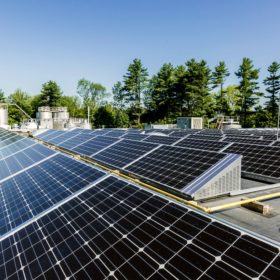
Probabilistic model indicates PV module warranty reliability
U.S.-Spanish researchers have proposed a new way to assess the reliability of PV modules and their warranties. It is impossible to fulfill a 25-year warranty if the threshold of returned modules exceeds 5% and the annual degradation rate is over 0.73%.
Power-to-hydrogen for multi-energy systems
Scientists in Switzerland say power-to-hydrogen is particularly promising for coupling electricity and heating and offsetting seasonal variation in renewables generation in sector-coupled energy networks. Their analysis indicated the technology may be especially useful in areas with a high ratio of seasonal thermal-to-electric demand.
