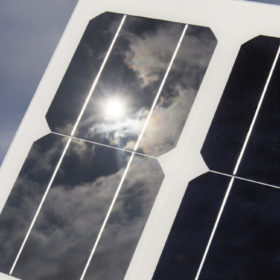
The weekend read: Reflections on a soiled module
Having quickly proven their performance-boosting potential and durability, anti-reflective coatings are now found on the majority of modules rolling off the world’s production lines. Today, coating suppliers are looking to tackle losses from soiling as well as reflection, and working to keep up with cost reductions and extended lifetime expectations at module level. Older modules, installed without a coating, could also be set to benefit from the latest innovations.

BePositive 2019 trade show – just a few weeks away – taking PV center stage
The show is expected to grow by 40% compared to last year. And the organizers say solar PV will have a higher profile than ever.

PV Market Alliance expects 120 GW of new solar capacity in 2019
The global market stagnated last year, with around 98 GW deployed. For 2019, the experts expect stronger solar growth, provided there are no setbacks in China.

PV Info Link: Jinko the largest module maker of 2018
According to the Taiwanese analysts, JA Solar was number two, followed by Hanwha Q-Cells and Trina Solar in joint third. The ten largest module makers met around 70% of demand, with 66 GW of shipments.

‘No alternative to 100% renewables’
Transition to a world run entirely on clean energy – together with the implementation of natural climate solutions – is the only way to halt climate change and keep the global temperature rise below 1.5°C, according to another significant study.
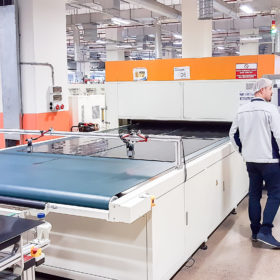
PI Berlin: Asia leading the way for module quality
Quality assurance provider PI Berlin has found the solar industry has made significant improvements to module quality in the past six years and that, perhaps surprisingly, manufacturers in China and South East Asia are setting the standard by producing higher quality modules, on average, than other regions.
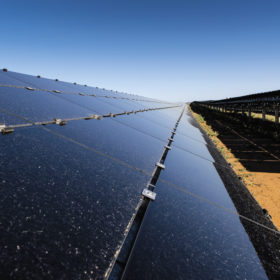
Solar will rebound this year with more than 100 GW of new capacity
Wood Mackenzie’s number-crunchers are the latest analysts queueing up to predict a bumper year ahead for PV, with falling prices, rising efficiency rates and booming markets outside China all on the cards. And it could be a make-or-break year for mega-projects, says Wood Mac.

The weekend read: Why are we not making the most out of big data analysis?
Although the solar industry sees itself as young, its assets are aging. Owners still struggle with the complexity of making the best use of big data analysis to improve plant efficiency and profitability. Ragna Schmidt-Haupt, of Everoze, examines why this has not changed, and what can or should be improved. Artificial intelligence, advanced data analytics, automated assessments and smart monitoring software – holistic solar asset management starts here.
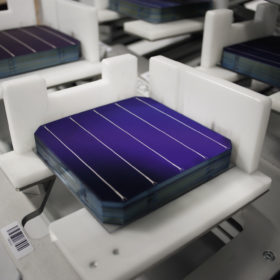
Energytrend: Stockpiles down, utilization and prices recovering
The Taiwanese market research company has published its latest price trend data for PV modules, cells, wafers and silicon. Across the value chain, rising demand is causing stockpiles to dwindle and utilization rates to rise. Prices are rising in China as well as for high-efficiency products. Module prices have stabilized.

China installed 43.6 GW of solar last year – despite 5/31 New Policy
Central subsidies may have been cut back but the domestic market rebounded quickly and overseas shipments soared on the back of rising production volumes and ever cheaper module prices.
