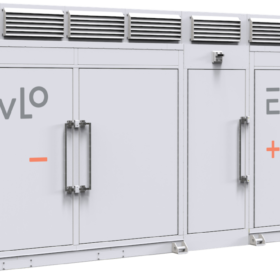
EVLO launches 1 MWh storage system
EVLO has designed a new 1 MWh system that will make its debut by suppling power during transmission line upgrades in Canada.

Fast charging for lithium-ion batteries needs a fix
Scientists in the United States placed fast charging for lithium-ion batteries under the microscope, finding that charging at higher rates can quickly damage the structure of a graphite anode, causing capacity loss even after a small number of cycles. By identifying the mechanisms causing this performance loss, the group can help point future research in the right direction.
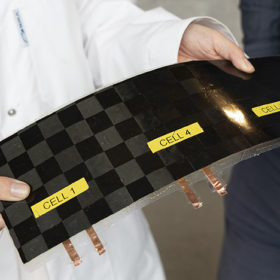
Massless battery for applications in vehicle-integrated solar
Swedish scientists have developed a structural battery that purportedly offers “massless” storage, as its weight vanishes when it becomes part of the load-bearing structure. The device has an energy density of 24 Wh/kg and is designed for easy integration into solar-powered vehicles.
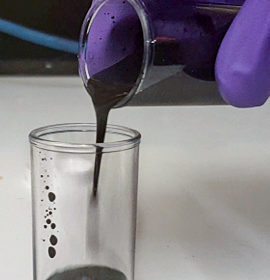
MIT scientists develop semisolid zinc-manganese dioxide flow battery for wind, PV storage
MIT researchers have created a semisolid flow battery that might be able to outperform lithium-ion and vanadium redox flow batteries. It features a new electrode made of dispersed manganese dioxide particles shot through with an electrically conductive additive, carbon black.
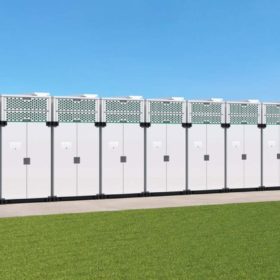
Centipede battery energy storage launched by Powin
The battery features a modular design with pre-integrated segments that contain batteries, thermal management, and safety systems. The design offers scalability and supports up to 200 MWh storage per acre.

Work begins on 250 MW/250 MWh grid-forming battery in Australia
Under construction by Australian utility AGL, the 250 MW/250 MWh battery is the largest planned grid-forming battery in the world.
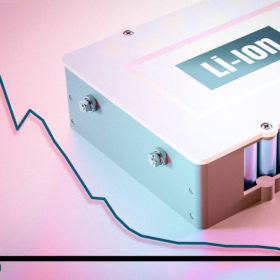
Behind the price drops in lithium-ion batteries
Scientists in the United States pieced together data from hundreds of different sources, looking to establish the key factors that have led to consistently falling prices for lithium-ion technology since their commercialization thirty years ago. They find that public-funded research, primarily in chemistry and materials science, has made the largest contribution to cost reduction. And they offer suggestions on policy and investment to ensure that the research can continue to make these important contributions to reduction in battery costs.
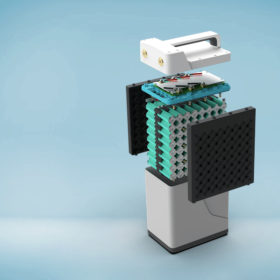
UK business claims to offer ‘world’s most sustainable lithium-ion battery’
English manufacturer Aceleron claims every component of its devices can be accessed for replacement, repair or recycling, with the business’ co-founder stating the aim is to ensure ‘100% of the materials in our batteries will continue to be used for as long as possible – preferably forever.’
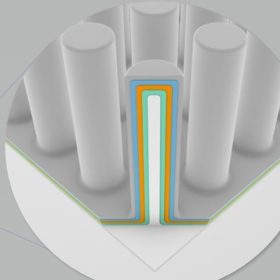
3D solid-state thin film battery from the Netherlands
Developed by a spin-off of Dutch research institute TNO, the battery is claimed to offer higher energy density, longer lifespan and increased safety compared to conventional lithium-ion batteries. It will initially be applied in wearables and electric cars.
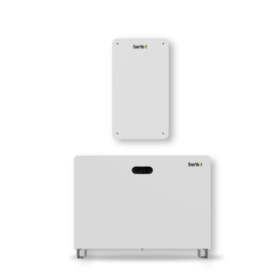
Panasonic launches new Evervolt battery
Panasonic said the system is available in the U.S. with storage capacities of 17.1 kWh and 25.65 kWh. The product comes with a floor-standing battery cabinet and a hybrid smart inverter with 4 MPPTs.
