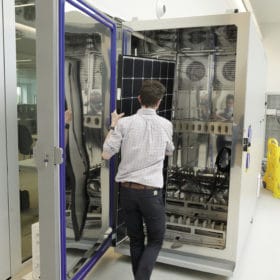
The weekend read: Bifacial adoption spurs rethink on PID
PV systems are unique among electronic devices, as they are expected to survive outdoors for at least 25 to 30 years. This makes module and system quality one of the cornerstones of guaranteed returns on investment. Potential-induced degradation (PID) is a critical failure mode with a potentially high financial impact. New research from imec and Hasselt University looks at the damaging impact that PID can have on bifacial technology, writes Michaël Daenen, a professor at EnergyVille and Hasselt University.

Prospects for bifacial and large-format products
The pandemic and accidents at polysilicon labs in China’s Xinjiang region put PV manufacturers under pressure to maintain production this year, while slowing cell and module R&D. After half-cut and multi-busbar becomes commonplace, manufacturers will continue to explore the high-density assembly methods that emerged last year, as well as n-type cells. But the market is also shifting to large formats, and the share of bifacial products is growing this year. As sizing up modules can bring immediate returns, PV InfoLink’s Amy Fang expects the PV industry to prioritize the development of large formats and bifacial products next year.
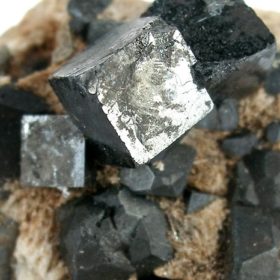
Bifacial perovskite solar cells may become more eco friendly than crystalline ones
A US study has suggested the raised energy yield of bifacial perovskite devices effectively means they could have a lower environmental impact than conventional crystalline cells. The researchers considered single-junction cells with high and low bandgaps and similar, multi-junction devices with two and four-terminal structures.
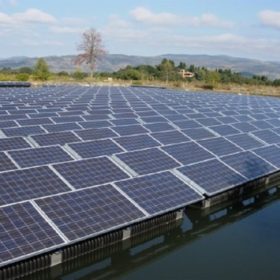
Investigating bifacial for floating PV
Scientists led by the University of Ontario modeled the performance of bifacial modules in floating PV applications, finding that in a north/south orientation at a 30 degree angle, the modules could receive as much as 55% more sunlight than a monofacial module in the same setup.
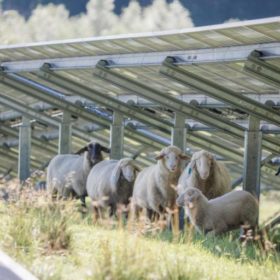
Austrian agrivoltaic project includes sheep farming
Maxsolar is building a ground-mounted, 11.5 MW solar plant near Wien where 150 Jura will graze.
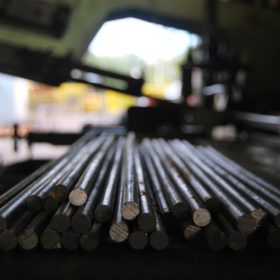
US steel mill to get powered by 300 MW of solar
The iron and steel sector is the ‘world’s largest industrial source of climate pollution.’ This steel mill in Pueblo, Colorado, will be the first in North America to rely on solar power.
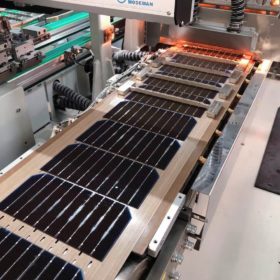
Half-cut, bifacial, 20.5%-efficient PERC modules from Vietnam
Chinese solar manufacturer Dehui is planning mass production of 12-busbar bifacial panels based on 182mm wafers from next year.
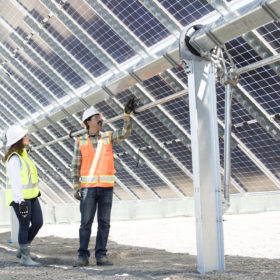
Nextracker inks 1 GW supply deal and claims up to 12% bifacial yield gain
The 1 GW fifth phase of the Mohammed bin Rashid Al Maktoum Solar Park in Dubai will feature NX Horizon trackers with the deal announced after the manufacturer published new bifacial yield gain claims.
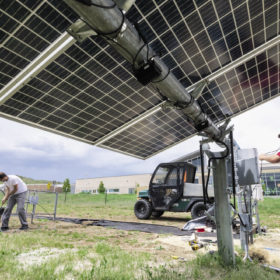
Bifacial modules: The challenges and advantages
Bifacial modules are one of the older developments in solar panel technology, dating back to the 1960s. It is also one of the latest advances to take hold. According to many experts, however, it is now on track as the latest trend to sweep the solar industry and will soon become the standard.

The ‘rubber-band effect’ on renewable energy project margins
David Riester of Lacuna Sustainable Investments, looks at how, on the journey from concept to monetized power plant, renewables and energy storage projects tend to get tugged toward ‘zero’ margin, from either direction. The further the rubber band is stretched, the stronger the pull back toward zero.
