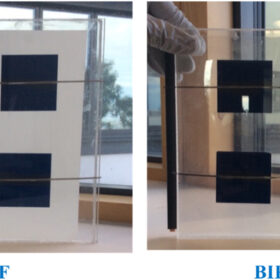
New solar window concept integrates polymer-dispersed liquid crystal to enable switchable transparency
Researchers in the United Kingdom have developed a smart window that combines switchable polymer-dispersed liquid crystal with integrated PV cells, offering controllable transparency and electricity generation. The system balances light, heat, and solar protection while maintaining high visual quality and stable performance, according to its creators.
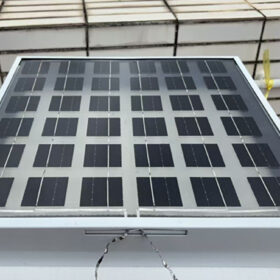
Thermochromic bifacial PV glazing system for reducing building cooling loads
Researchers in Hong Kong Hong Kong fabricated a thermochromic bifacial photovoltaic glazing system prototype that passively regulates solar heat gain while harvesting energy from both sides. Experiments and simulations showed it significantly reduces cooling loads and indoor temperatures while boosting electricity generation.
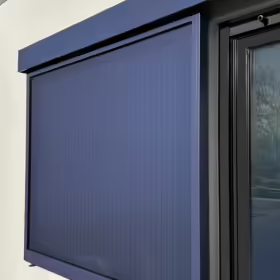
Sliding shutters integrate PV for building facades
German manufacturer Ehret has launched SolarSlide, a sliding shutter with integrated PV modules developed with the Fraunhofer Institute for Solar Energy Systems (Fraunhofer ISE). It provides solar shading while generating electricity for residential and commercial facades.
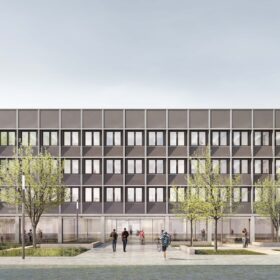
German consortium launches web guide for BIPV planning
Germany’s SolarEnvelopeCenter project has launched a web-based planning guide for building-integrated photovoltaics (BIPV), offering standardized design solutions for roofs and facades that comply with building codes and industry standards.
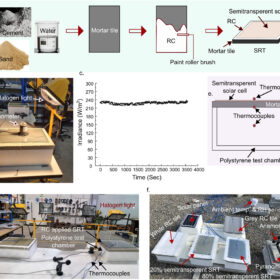
New reflective coating increases BIPV power output by 11%
Australian researchers developed a low-cost reflective coating for semi-transparent solar roof tiles that lowers surface temperatures by up to 20 C and boosts power output by up to 11.7%. Simulations across five global cities showed energy savings of up to 5.85%, highlighting the coating’s strong potential for improving both building cooling efficiency and solar performance in BIPV systems.
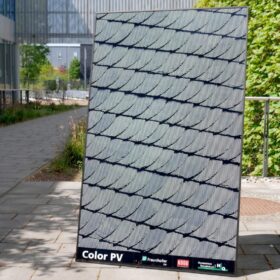
Retrofit coloring solution makes conventional solar panels less visible
Fraunhofer CSP researchers in Germany are developing printing and color technologies to make conventional silicon PV panels less visible when installed on building façades, roofs, and balconies.

Onyx Solar BIPV solution turns skyscraper skin into power source
Spanish building-integrated PV (BIPV) manufacturer Onyx Solar is delivering a custom building integrated PV system featuring almost 1,800 solar glass ‘louvres’ designed to help power Australian tech giant Atlassian’s new 39-storey headquarters in downtown Sydney with 100% renewable energy
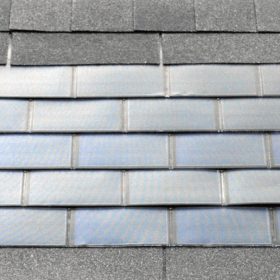
IEA PVPS invites modelers to join first coloured BIPV intercomparison
IEA-PVPS Task 15 has launched its first modeling intercomparison exercise on coloured building-integrated photovoltaics (BIPV) and is inviting PV modelers and researchers to evaluate their methods using real-world performance data.
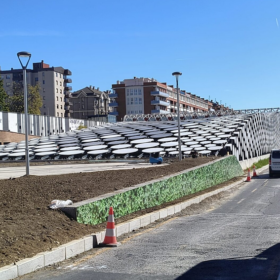
Spanish startup develops BIPV systems for tunnel exits, entrances
Spain-based Izpitek has developed an 86 kW building-integrated photovoltaics (BIPV) installation for tunnel entrances and exits that supplies power for lighting, demonstrating how solar energy can be adapted to complex architectural environments.
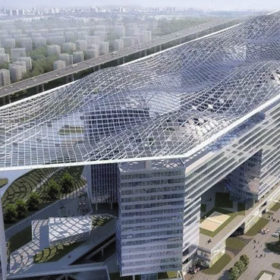
Semi-transparent photovoltaics cost-competitive only up to 50% transparency
Researchers from Spain found that semi-transparent PV systems are commercially viable only up to about 50% transparency, as higher transparency sharply reduces efficiency and increases system costs. Their analysis shows that declining power density, and not balance-of-system or financing factors, is the main driver of higher LCOE, even in high-irradiation regions.
