
Optimum tilt angle for PV systems ranging from 0° to 90°
A Slovak research team has developed a mathematical model for determining the optimum tilt angle of a solar system ranging from 0° to 90°. Their framework was tested on an experimental setup in Czechia and attained 93.9% accuracy in predicting the system’s energy balance.
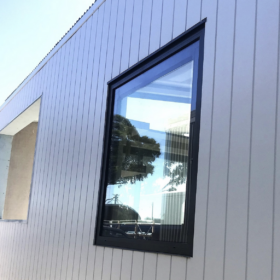
ClearVue unveils Gen3 solar glass with 66% higher energy output
ClearVue Technology says the latest iteration of its solar vision glass delivers more than 66% additional energy output per square metre than its predecessor, while significantly reducing production complexity and costs.
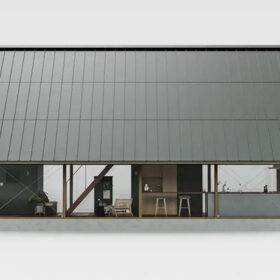
Japanese startup debuts silver-colored BIPV solar module
The new product weighs 13 kg/m2 and is claimed to be particularly suitable for building facades. It features a power ouput of 75 W and a junction box with an IP-68 rating.
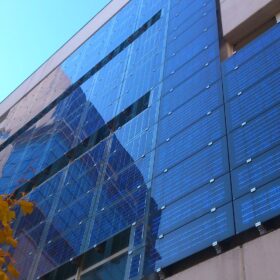
Building a new solar industry segment
A study conducted by the German development agency Deutsche Gesellschaft für Internationale Zusammenarbeit (GIZ) in collaboration with India-based think tank the Center for Study of Science, Technology and Policy (CSTEP), found that India has the potential for more than 300 GW of building-integrated photovoltaic (BIPV) systems on its existing buildings alone. Moreover, according to a World Bank report, 70% of the buildings India will need to become a developed nation by 2047 are yet to be constructed, underscoring the vast future potential for BIPV systems in the country.
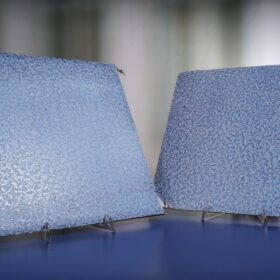
Fraunhofer researchers develop decorative films for BIPV
Fraunhofer Institute for Electron Beam and Plasma Technology (FEP) researchers are using roll-to-roll nanoimprint lithography to produce visually seamless building-integrated photovoltaics (BIPV) modules.

Italy backs 1 GW tandem solar line with Huasun, New Time by 2026
Chinese manufacturer Huasun and Italian developer New Time plan to jointly develop a 1 GW heterojunction–perovskite tandem solar line in northern Italy by the third quarter of 2026, with public support and a focus on building-integrated photovoltaic (BIPV) applications.

Solitek launches anti-glare black bifacial solar modules
Lithuania’s Solitek has launched full-black 425 W bifacial solar modules with matte, satin-textured glass for glare-sensitive sites such as airports, road barriers, and buildings.

U.S. startup installs building-integrated, organic photovoltaic facade
Next Energy Technologies has completed the first installation of its transparent organic photovoltaic glass facade. The 9.3 m2 installation is located at its headquarters in Santa Barbara, California.
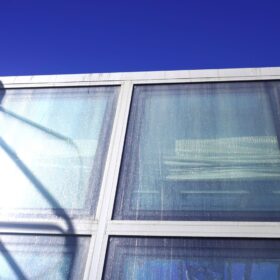
ClearVue BIPV solution achieves 2.6-year payback in Hong Kong trial
ClearVue Technologies says its solar facade solutions, that combine the company’s solar glazing units into a fully integrated energy generating building envelope, have achieved a payback period of less than three years in a Hong Kong government trial.

Solarix Solar launches new terracotta solar panel
The Netherlands-based solar façade panel and mounting system provider has added a new terracotta rooftop module to its product range. It also announced it is expanding it sales network and boosting its manufacturing capacity after raising €5.5 million in financing.
