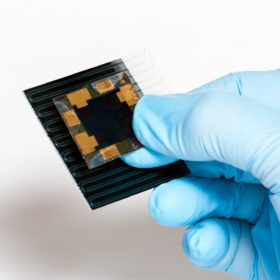
Miasolé sets new flexible CIGS efficiency record
U.S. based Hanergy subsidiary Miasolé has achieved a record 17.44% conversion efficiency for a large area flexible CIGS module. The record has been confirmed by the Fraunhofer Institute for Solar Energy Systems.

BIPV chance for successful energy transition in European cities
With buildings responsible for 36% of EU greenhouse gas emissions and half the bloc’s energy demand, European cities will have to accelerate deployment of renewable energy and foster substantial investment in energy efficiency to become carbon neutral by 2050. A new report has found ‘solar skins’ are well positioned to help achieve that goal and multiply the contribution of rooftop solar.
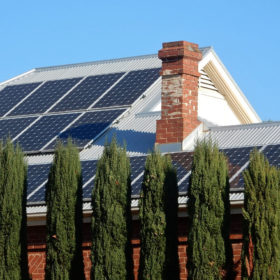
Cross-mating of connectors was chief cause of Netherlands PV fires
According to an investigation conducted by public bodies, cross-mating of connectors was the main common denominator of the incidents studied.
Tesla, GAF, RGS and now Hanergy: will solar roofs finally heat up this year?
Hanergy displayed the newest rendition of its 18.7% Thin Film Flat SOLARtile in Australia last week as it gears up for the U.S. and global product launch later in 2019.
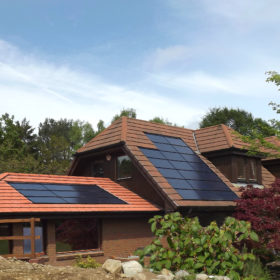
ML System to build BIPV module factory in Poland
The company has received financial support of PLN 50 million ($13 million) for the project from the Polish national development bank. The facility will produce BIPV cells and panels based on ML System’s quantum dots technology.
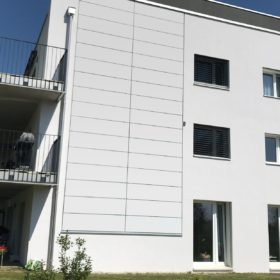
BIPV in Europe: More than just a facade
The renowned PV-Lab at Switzerland’s École Polytechnique Fédérale De Lausanne today announced that it has taken on the role of coordinator for the EU funded research project ‘Be-Smart’, which aims at developing a European industry for building integrated PV components.
Hanergy opens up with details of China’s new Great (Han)Wall
Thin-film manufacturer says its skyscraper product, which can be retrofitted, will open up a new BIPV marketplace – but spokesman sidesteps question of whether Trump’s solar duties will apply in the US.

Fraunhofer ISE, Schmid develop production line concept for custom design modules
German research institute, the Fraunhofer Institute for Solar Energy Systems (ISE) and equipment supplier, Schmid have jointly developed a production line for customizable modules for building-integrated projects. According to Fraunhofer ISE, the concepts developed by joint study could reduce the production cost for BIPV modules as much as 35%.

Berkeley Lab researchers develop perovskite ‘smart window’ material
Scientists from the renowned U.S. Berkeley Laboratory have discovered a perovskite material, which can be used in photovoltaic glass applications, and can be switched between transparent and non-transparent without diminishing its electronic properties.

Skanska, Saule Technologies to install BIPV perovskite modules on office buildings
The two companies have signed a license agreement. The first pilot projects with the semitransparent perovskite solar cells are planned for this year in Poland
