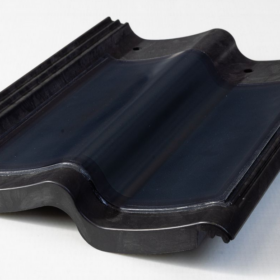
TNO unveils 12.4%-efficient perovksite solar tile
The Dutch research institute has presented what it describes as the world’s first perovskite-based roof tile, achieving up to 13.8% efficiency on standalone modules and 12.4% when installed on a curved surface. The flexible modules were produced using TNO’s experimental roll-to-roll platform,
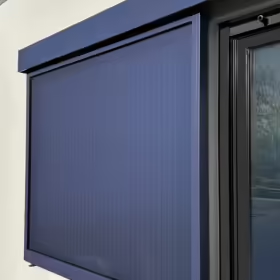
Sliding shutters integrate PV for building facades
German manufacturer Ehret has launched SolarSlide, a sliding shutter with integrated PV modules developed with the Fraunhofer Institute for Solar Energy Systems (Fraunhofer ISE). It provides solar shading while generating electricity for residential and commercial facades.
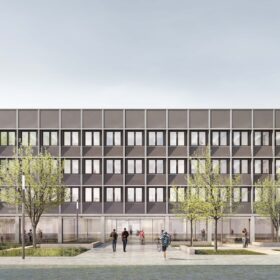
German consortium launches web guide for BIPV planning
Germany’s SolarEnvelopeCenter project has launched a web-based planning guide for building-integrated photovoltaics (BIPV), offering standardized design solutions for roofs and facades that comply with building codes and industry standards.
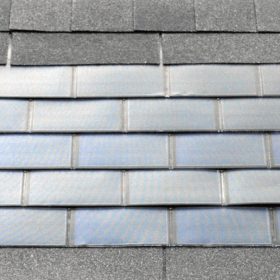
IEA PVPS invites modelers to join first coloured BIPV intercomparison
IEA-PVPS Task 15 has launched its first modeling intercomparison exercise on coloured building-integrated photovoltaics (BIPV) and is inviting PV modelers and researchers to evaluate their methods using real-world performance data.
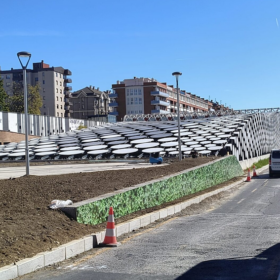
Spanish startup develops BIPV systems for tunnel exits, entrances
Spain-based Izpitek has developed an 86 kW building-integrated photovoltaics (BIPV) installation for tunnel entrances and exits that supplies power for lighting, demonstrating how solar energy can be adapted to complex architectural environments.

Historic icons, modern energy: Why heritage buildings need solar roofing
Heritage buildings face mounting pressure to cut carbon emissions, but traditional solar panels often clash with their historic appearance and face public resistance. Building-integrated photovoltaics (BIPV) offer a discreet alternative, blending solar technology into roofing materials and enabling wider adoption across protected sites. As UK policy increasingly supports solar on historic buildings, BIPV presents a scalable solution that reconciles climate action with architectural preservation.
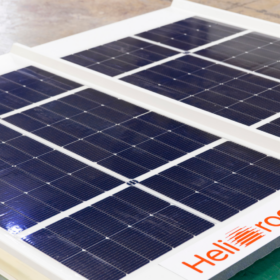
ArcelorMittal starts BIPV module production in France
ArcelorMittal has started producing its Helioroof building-integrated PV modules in France. The steelmaker says the system aims to simplify energy retrofits for commercial and industrial roofs.
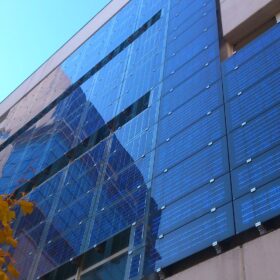
Battery storage boosts viability of south-facing solar facades
Researchers in Germany have examined how battery storage could help façade PV systems move beyond their niche market by 2030. Their findings show that a large majority of south-oriented façades in Europe could be equipped with vertical solar arrays combined with batteries.

Building-integrated concentrating photovoltaics for vertical applications
An Indian-British research team has developed a building-integrated linear concentrating PV facade by sandwiching an asymmetric compound parabolic concentrator, PERC cells, and encapsulation layers between two sheets of glass. The system was tested under both indoor and outdoor conditions and its payback period was found to be of up to 11 years.
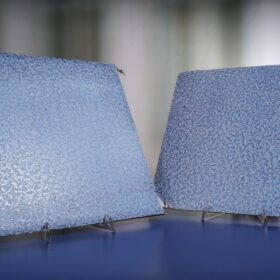
Fraunhofer researchers develop decorative films for BIPV
Fraunhofer Institute for Electron Beam and Plasma Technology (FEP) researchers are using roll-to-roll nanoimprint lithography to produce visually seamless building-integrated photovoltaics (BIPV) modules.
