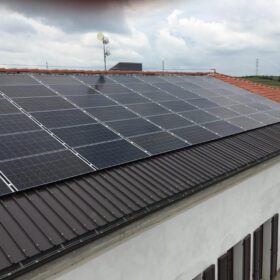
Italy’s Energy City Hall starts first cross-border energy community
Italy’s Energy City Hall (ECH) has launched a cross-border energy community with partners in France and Monaco, aiming to begin operations in 2026 under Italian renewable energy rules.

Norway exempts solar power sharing in industrial zones from grid fees
Norway has introduced fiscal incentives for commercial and industrial (C&I) energy communities, exempting solar power sharing within a single industrial site from electricity taxes and grid fees.

EV charging shapes PV investment, grid load in community study
Researchers in Spain have simulated an energy community with varying electric-vehicle penetration levels (0%, 50%, and 100%) to analyze system optimization under different regulatory frameworks and EV brands. Charging strategies significantly affected overall performance and outcomes.

Colombia introduces new rules for energy communities
Colombia’s energy regulator has approved new regulations allowing the creation of energy communities, aiming to add at least 1 GW of renewable capacity to the national grid.

New tool digitizes management of energy communities
CIRCE presents Communit-e, a software program to support the work of community managers, streamline management time and improve transparency among members.

Could German PV energy communities participate in the balancing market?
The RWTH Aachen University has simulated 27 scenarios of energy communities participating in the balancing market in Germany and has found that the business model behind an energy community is only feasible if battery storage is available.

France exempts energy communities up to 1 MW from excise duty
France’s 2025 Budget Law exempts energy communities with projects up to 1 MW from excise duty on electricity consumption. The measure applies retroactively from Jan. 1, 2025, and remains in effect until Jan. 1, 2027.
Community managers key to wider adoption of energy communities
New research from France suggests that energy communities could benefit from dedicated community managers to address operational complexities. Researchers says that this role could offer contracts or assurances to ease concerns among risk-averse members.
Energy communities should be supported via network tariff adjustments
New research from Belgium shows that energy-sharing alone is not attractive enough for citizens and businesses willing adopt solar through an energy community. According to the study, policy support for energy communities should take the form of network tariff adjustments reflecting the community’s measurable benefits for the distribution grid.

Norway defining new rules for energy communities
The Norwegian government says it is creating a new regulatory framework for energy communities. The new provisions will allow PV systems up to 5 MW in size to sell power and share surplus energy within specific industrial areas.
