
Kuwait tenders 1.1 GW solar project
Kuwait has tendered a 1.1 GW solar project to supply electricity to the Ministry of Electricity, Water, and Renewable Energy under a 30-year power purchase agreement (PPA).
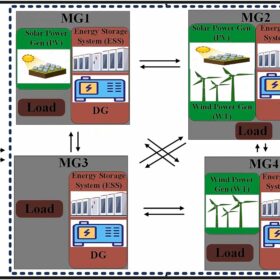
Energy trade model for interconnected renewable microgrids
Scientists from China proposed a new method for energy trade optimization between interconnected microgrids and the main utility grid. The novel approach utilizes particle swarm optimization and gravitational search algorithms with Nash Bargaining.
US battery storage demand to surge within this decade, says SEIA
US demand for battery energy storage systems will grow sixfold by 2030, according to a recent report by the Solar Energy Industries Association (SEIA), but only with serious investment, coordination with experienced manufacturers, and collaboration with allies.
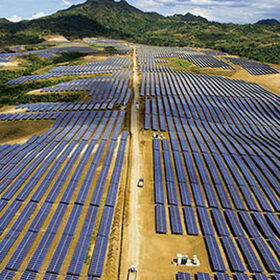
Solar Philippines begins working on 4 GW solar park
Solar Philippines says it has broken ground on what it touted to be the world’s largest solar array – a 4 GW solar park spread across 3,500 hectares of land in the northern part of the country.
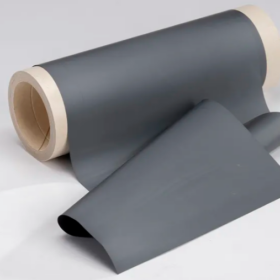
GDI unveils 100% silicon anode for rapid charging, higher energy density
Third-party tests of GDI’s 100% silicon anodes show that they offer more than 30% energy density than graphite anodes, allowing for 15-minute rapid charging up to 80% state of charge (SOC) for hundreds of times back to back.
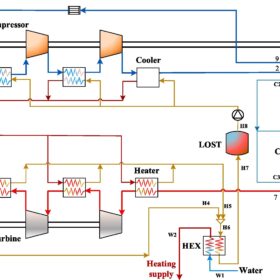
PV-driven liquid air storage system for buildings
An international research group has developed a PV-driven liquid air energy storage (LAES) system for building applications. Simulations suggest that it could meet 89.72% of power demand, 51.96% of heating demand, and 11% of cooling demand in a PV-powered building.
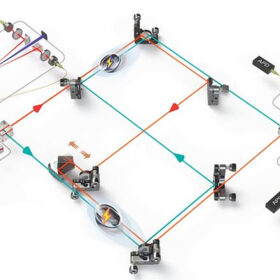
Charging quantum batteries
Researchers in Japan have taken advantage of an unintuitive quantum process that disregards the conventional notion of causality to improve the performance of so-called “quantum batteries.” They believe these advances could help to bring the technology a little closer to reality.
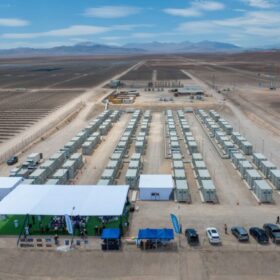
Chile approves plan to allocate public land for energy storage projects
A new initiative by the Chilean Ministry of Energy and the Ministry of National Assets is expected to cover storage projects with an aggregate capacity of 13 GWh, distributed mainly in the regions from Arica y Parinacota to Atacama.
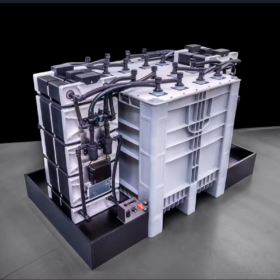
CMBlu Energy’s organic flow batteries to be tested in microgrids, cold climates
The US Department of Energy’s (DoE) Argonne National Laboratory and Idaho National Laboratory will carry out demonstration projects to validate long-duration energy storage tech developed by German manufacturer CMBlu Energy. The collaborative project is designed to improve microgrids in cold climates and make fast charging of electric vehicles more affordable in underserved communities.
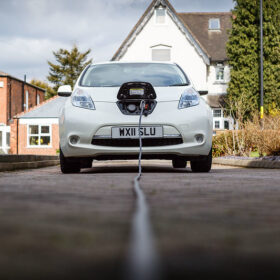
How to integrate residential solar-plus-storage with vehicle-to-home systems
Researchers from Australia have created a model to optimize the interaction between vehicle-to-home (V2H) systems and residential PV connected to battery storage. They claim V2H can help reduce the cost of energy by 16.7% for workplace charging and 25% for public charging.
