
Grid stability and 100% renewables
New research from Stanford University professor Mark Jacobson seeks to remove any doubts about grid stability in a world powered entirely by renewable energy. The latest study models 100% wind water and solar powered grids across the United States, finding no risk of blackouts in any region and also broad benefits in cost reduction, job creation and land use.
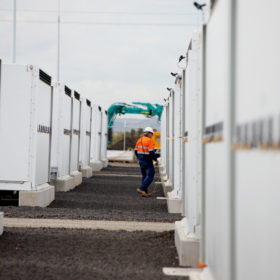
Australia switches on new storage battery
Neoen has started operating a 300 MW/450 MWh big battery in Geelong, Australia. In spite of a fire during commissioning in July, the battery has been delivered in record time, taking less than a year to build and begin operations.
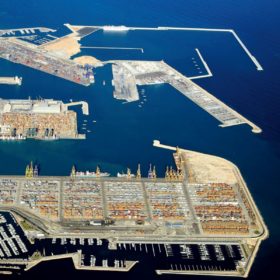
The Hydrogen Stream: ‘China, Chile, Spain and Australia will lead the hydrogen economy’
The International Energy Agency said the four nations are on track to contribute 85% of the 18 GW of global renewables capacity which is set to be dedicated to green hydrogen production by 2026. Elsewhere, the Port of Valencia has unveiled a plan to install a green hydrogen supply station in the new year.
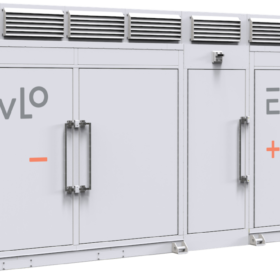
EVLO launches 1 MWh storage system
EVLO has designed a new 1 MWh system that will make its debut by suppling power during transmission line upgrades in Canada.

Fast charging for lithium-ion batteries needs a fix
Scientists in the United States placed fast charging for lithium-ion batteries under the microscope, finding that charging at higher rates can quickly damage the structure of a graphite anode, causing capacity loss even after a small number of cycles. By identifying the mechanisms causing this performance loss, the group can help point future research in the right direction.
Cost optimal solutions for residential solar-powered heat pumps in cold climates, isolated areas
A U.S.-Swedish research group has investigated the complex economic relationship between PV and heat pumps in cold climates under four different levels of electrification. It found that, compared to propane, solar heat pumps can reduce reduce costs by up to 20% and carbon emissions by 30%.
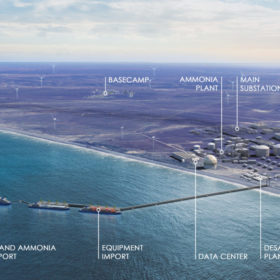
The Hydrogen Stream: 8 GW green hydrogen project announced in Chile
Meanwhile, on the Iberian Peninsula, H2 Green Steel (H2GS) and Iberdrola plan to establish a 1 GW green hydrogen production facility, and Acciona and Plug Power want to deploy green hydrogen facilities across Spain and Portugal.
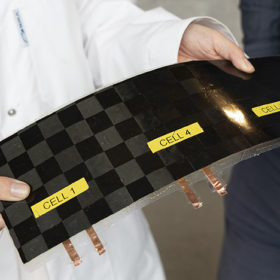
Massless battery for applications in vehicle-integrated solar
Swedish scientists have developed a structural battery that purportedly offers “massless” storage, as its weight vanishes when it becomes part of the load-bearing structure. The device has an energy density of 24 Wh/kg and is designed for easy integration into solar-powered vehicles.
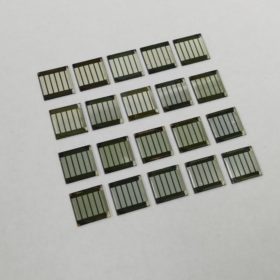
Dion-Jacobson perovskite solar cell with 18.82% efficiency
Scientists in China have used a fused-thiophene spacer to build a two-dimensional perovskite solar cell. It has an open-circuit voltage of 1.03 V, a short circuit current of 22.38 mA cm2, and a fill factor of 81.64%.

Tata Power awarded India’s largest solar and battery storage project
Tata Power Solar has secured the engineering, procurement, and construction contract for a 100 MW solar field with a 120 MWh battery. The project, awarded by the Solar Energy Corporation of India, will be in the state of Chhattisgarh.
