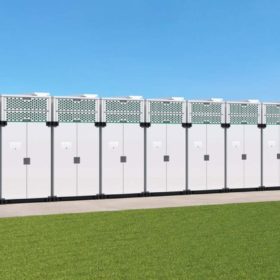
Centipede battery energy storage launched by Powin
The battery features a modular design with pre-integrated segments that contain batteries, thermal management, and safety systems. The design offers scalability and supports up to 200 MWh storage per acre.
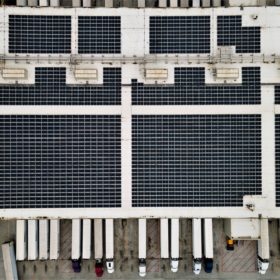
Coupling photovoltaics with linear generators
A 3.3 MW rooftop PV array and 480 kW of linear generators are currently being used to cover 100% of the electricity needs of a logistics facility in California. The hybrid energy system is relying on a linear generator technology provided by U.S. specialist Mainspring Energy that converts mechanical energy into electrical energy.

Work begins on 250 MW/250 MWh grid-forming battery in Australia
Under construction by Australian utility AGL, the 250 MW/250 MWh battery is the largest planned grid-forming battery in the world.
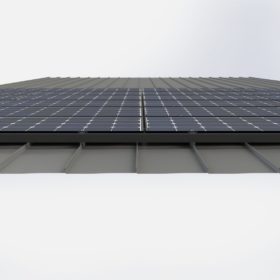
Module skirt for PV arrays built on seam metal roofs
The PVonceal module skirt protects all of a module’s electrical components while maintaining sleek aesthetics for the lifetime of the installation.

Canadian mining company acquires 10 vanadium sites in Morocco
Canada-based Elcora said the transaction will enhance its mining operations and energy storage business.

Phase-change material tech to store thermal energy, solar electricity in buildings
NREL scientists have unveiled a storage system based on a phase-change material that can store both thermal energy and electricity in a single device. According to the researchers, the new technology may be used to store excess electricity produced by on-site solar or wind operations in large scale buildings.
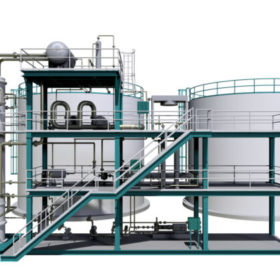
The Hydrogen Stream: New tech to store 5 tons of hydrogen per day
Proton Motor Fuel Cell and xelectrix Power have also developed a complete system that combines fuel cell and battery storage technologies and U.S.-based Plug Power is building a 100 MW electrolyzer in Egypt. Furthermore, Germany said it wants to deploy 10 GW of hydrogen capacity by 2030 and South Korea unveiled its hydrogen strategy.
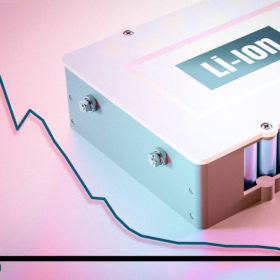
Behind the price drops in lithium-ion batteries
Scientists in the United States pieced together data from hundreds of different sources, looking to establish the key factors that have led to consistently falling prices for lithium-ion technology since their commercialization thirty years ago. They find that public-funded research, primarily in chemistry and materials science, has made the largest contribution to cost reduction. And they offer suggestions on policy and investment to ensure that the research can continue to make these important contributions to reduction in battery costs.
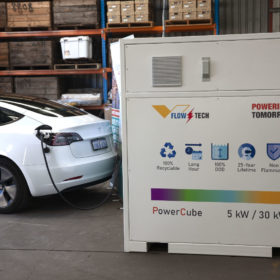
VSUN tests flow battery technology with standalone PV-powered EV charger
Australian energy storage company VSUN Energy claims to have identified the ‘missing piece of the renewable energy jigsaw’ after successfully testing a standalone electric vehicle battery charger using solar PV supplied by a vanadium redox flow battery.

Round-the-clock tenders can help India meet demand for firm renewable power
A report has stated the renewable-plus-fossil fuel model is the best short term option to meet the assured supply conditions in the Solar Energy Corporation of India’s round-the-clock power tenders. Further out, as the cost of batteries decline, that technology is likely to become the most viable option for providing critical, non-intermittent power.
